
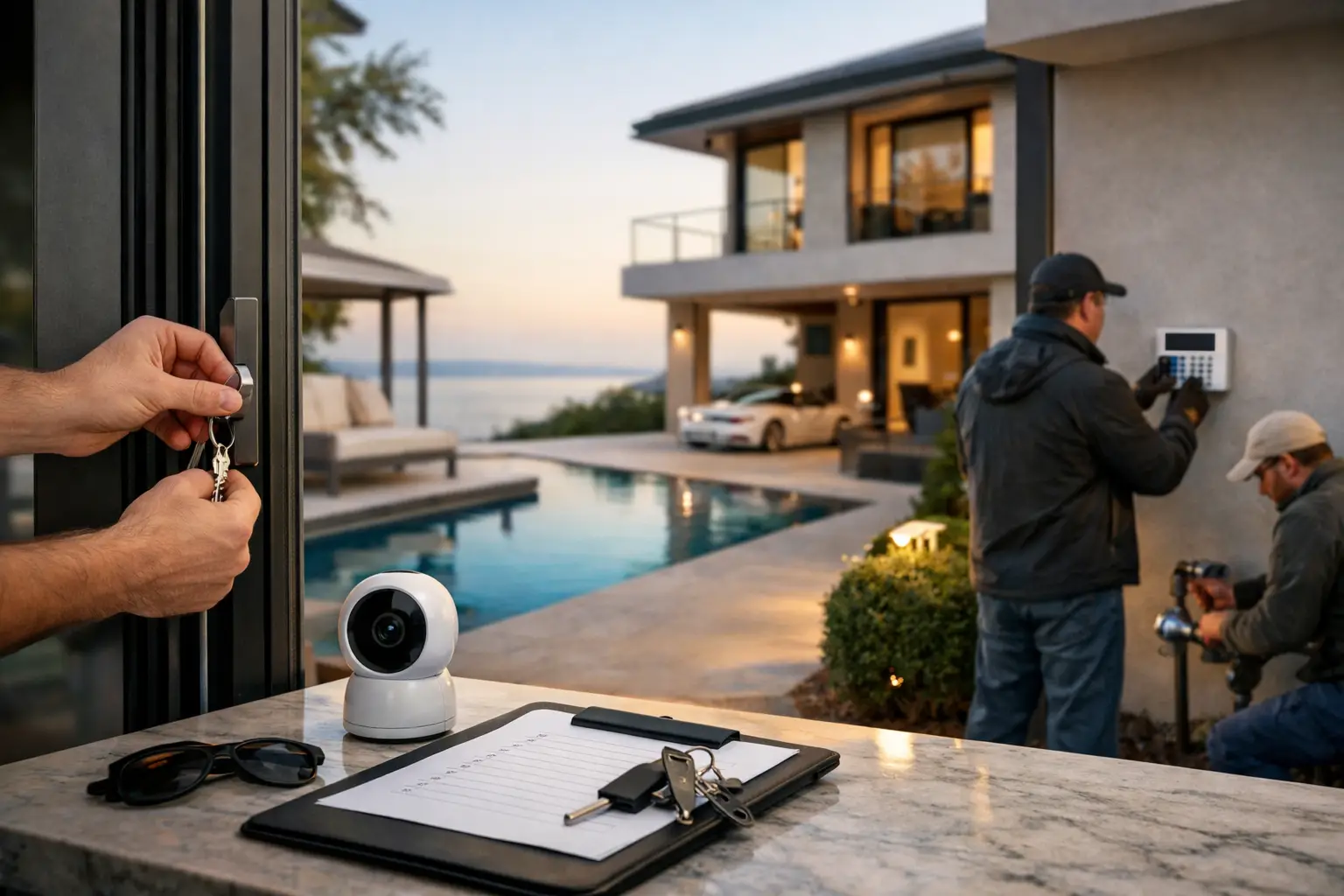
A luxury home can look perfectly composed on the day you leave and still develop a costly problem within a week. In Arizona, a minor irrigation failure, HVAC interruption, monsoon-driven water intrusion, or unnoticed leak can affect finishes, furnishings, landscaping, and mechanical systems before an absentee owner ever receives a warning. Knowing how to prepare luxury homes for an extended absence means treating departure as a property-protection process, not a quick checklist.
For a second home in Scottsdale, Paradise Valley, or Fountain Hills, the goal is not simply to lock the door. It is to leave the residence stable, documented, secure, climate-controlled, and ready for professional oversight. The right preparation protects the home’s condition while allowing you to leave with confidence rather than a running list of concerns.
How to Prepare Luxury Homes With a Departure Plan
The most effective departure plans begin several days before travel, not while luggage is waiting by the entryway. Luxury residences often have multiple zones, specialty finishes, smart-home technology, detached structures, pools, guest casitas, wine storage, and elaborate landscaping. Each adds value, but each also creates another point that requires deliberate attention.
Start by identifying the systems that must remain active and the systems that can be reduced or shut down. There is no single setting that suits every property. A fully furnished seasonal residence with artwork, wood finishes, and a climate-sensitive wine collection requires a different approach than a minimally furnished condominium.
Create a written departure standard for the home. It should establish preferred thermostat ranges, pool and landscape service schedules, vendor contacts, alarm procedures, utility account information, and clear authorization for emergencies. This document should be stored securely and updated whenever a vendor, code, or system changes.
Protect the Interior Environment
Temperature and humidity are central to protecting an unoccupied luxury home. Setting the thermostat too high may reduce energy costs, but excessive heat can place unnecessary strain on hardwood, cabinetry, electronics, artwork, upholstery, and stored belongings. Conversely, an overly aggressive cooling schedule wastes energy and may not address humidity or airflow concerns in less-used rooms.
For many Arizona homes, a monitored thermostat setting within a reasonable range is preferable to turning the HVAC system off. The appropriate range depends on construction, exposure, interior materials, pets, and the owner’s preferences. Confirm that condensate lines are clear, filters are fresh, and the system has recently been serviced before departure.
Walk each interior space with an eye for small issues that become large ones when no one is present. Check beneath sinks, around toilets, behind refrigerators, near water heaters, and at laundry connections. Look for staining, moisture, odor, unusual sounds, or evidence of slow drainage. A water sensor can be valuable in vulnerable areas, but it should support regular physical inspections rather than replace them.
Protect furnishings with intention. Close window coverings where direct sun can fade fabric, flooring, or artwork, while avoiding a completely sealed, dark appearance that signals vacancy. Remove perishables, empty trash, and confirm that refrigerators and freezers are operating as intended. If a refrigerator will be shut down, clean and dry it completely and leave doors appropriately positioned to prevent odor and mildew.
Secure the Exterior Without Creating Hidden Risks
Security preparation should feel discreet and layered. Visible signs of vacancy, accumulated deliveries, dark entryways, neglected landscaping, and an unmoved vehicle can draw attention. Yet a property that appears over-fortified can also suggest that no one is home. The better approach is to maintain a normal, cared-for appearance.
Confirm that gates, garage doors, windows, exterior doors, and secondary access points are fully secured. Review alarm settings, camera connectivity, exterior lighting schedules, and emergency contact notifications. Smart-home alerts are useful, but their value depends on who will see them, how quickly they can verify an issue, and who is authorized to respond on site.
The exterior also needs protection from weather and maintenance failures. Arizona’s intense heat and monsoon season can expose weaknesses quickly. Inspect rooflines and drains for debris, verify that irrigation is operating correctly, and check for active leaks around hose bibs, pool equipment, and outdoor kitchens. Review the pool’s water level and service schedule, particularly if the property includes water features or automated equipment.
Landscaping requires more than a recurring gardener visit. Mature desert plantings, trees, lighting, hardscape, and irrigation zones should be observed for signs of stress, flooding, or damage. A broken irrigation line can create substantial water waste and affect foundations, walls, or neighboring properties if it is not caught promptly.
Document the Home Before You Leave
Documentation brings accountability to property preparation. Before departure, record the home’s condition with dated photographs and notes. Focus on high-value rooms, mechanical equipment, exterior areas, vehicles left on site, and any condition that should be monitored. This creates a useful reference if a concern arises later and allows a property oversight professional to distinguish a new issue from an existing one.
Keep records practical rather than excessive. The goal is not to photograph every drawer. It is to create a clear visual baseline for areas most likely to experience damage or require vendor attention. For example, document the pool equipment display, thermostat reading, main water valve position, wine room conditions, exterior gates, and any area where maintenance is underway.
A structured inspection process should continue after you leave. Time-stamped photo reporting gives homeowners a clear view of the property’s condition without requiring them to interpret vague assurances that someone “stopped by.” It also creates a reliable record of what was inspected, when it was inspected, and what action was taken if an issue appeared.
Establish a Response Plan Before There Is a Problem
A trusted local contact is only helpful when their role is clear. Decide in advance who can authorize emergency repairs, approve access for vendors, receive alerts, and make decisions if you are traveling internationally or otherwise unavailable. Include preferred vendors for HVAC, plumbing, electrical work, pool service, landscaping, roofing, and security.
The strongest plans establish financial and communication boundaries as well. Determine whether your property oversight provider may approve repairs up to a specific amount, whether you want estimates first, and how quickly you expect to be contacted for different categories of concern. A dripping faucet and an active water leak do not require the same escalation process.
For long absences, professional property oversight provides a meaningful advantage over occasional favors from neighbors or friends. A neighbor may notice an obvious concern, but a trained home watch professional follows a consistent inspection protocol, recognizes subtle changes, documents findings, and coordinates qualified vendors when needed. This is especially important in homes with complex systems and a high standard of finish.
I Watch 4 You provides this level of white-glove oversight through structured interior and exterior inspections, detailed reporting, and responsive vendor coordination for luxury homeowners who are away. The purpose is not merely to identify problems, but to address them with precision before they become disruptive or expensive.
Prepare for Your Return as Carefully as Your Departure
A well-managed home should not greet you with a backlog of calls, deliveries, and maintenance tasks. Return preparation may include adjusting interior temperatures, checking for leaks or system alerts, confirming pool and landscape condition, bringing in packages, stocking requested essentials, and coordinating any necessary service before you arrive.
This is where the difference between property checks and concierge-level care becomes clear. If a home has been monitored consistently, its return preparation can be tailored to your arrival schedule and preferences. If a concern developed while you were away, you should know what happened, what was done, and whether any follow-up is still needed before you walk through the door.
Before your next departure, give the home the same attention you would give any valuable asset placed in another’s care: establish standards, document condition, assign responsibility, and make sure a qualified professional has the authority to act. Peace of mind is rarely accidental. It is the result of preparation that remains attentive long after your flight has left the runway.

