
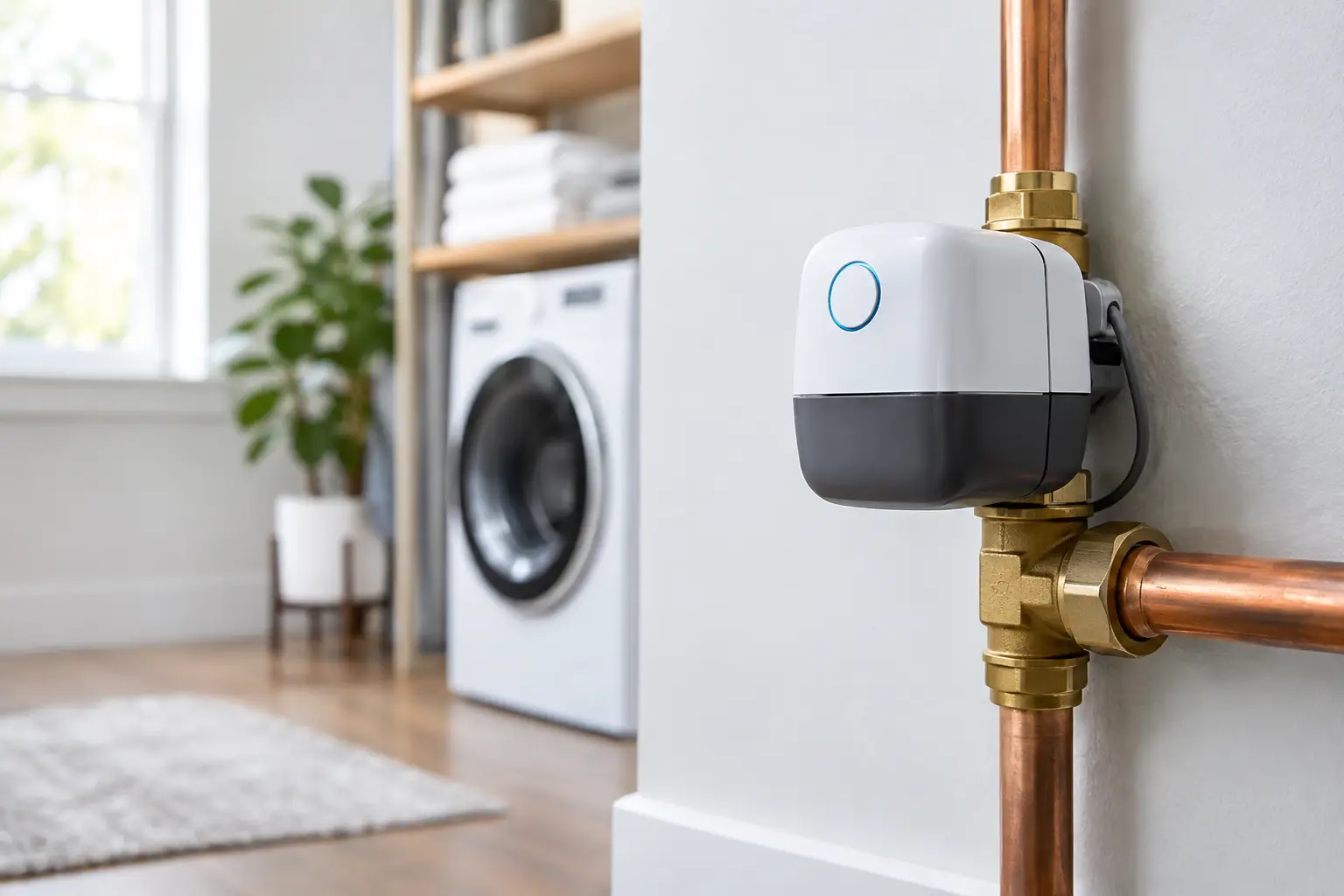
A minor leak beneath a vanity can become a major restoration project long before a seasonal homeowner returns to Scottsdale. The best smart water shutoff devices offer a meaningful layer of protection: they monitor for unusual water activity and, in many cases, close the home’s main water supply before a small failure becomes extensive damage.
For a luxury residence, however, choosing a device is not simply a matter of buying the most connected option. Plumbing layout, cellular or Wi-Fi reliability, irrigation lines, water treatment equipment, and who will respond to an alert all shape whether the system delivers genuine peace of mind. A smart shutoff is most valuable when it supports a disciplined property-protection plan rather than becoming another unattended app notification.
What Makes a Smart Water Shutoff Worthwhile?
A whole-home smart shutoff is installed at or near the main domestic water line. It uses a motorized valve, a flow sensor, or both to identify patterns that may indicate a leak. Depending on the system, it can send an alert, allow remote shutoff through an app, or close the valve automatically when it detects sustained or abnormal flow.
This is distinctly different from a small battery-powered leak sensor placed under a sink. Point sensors are useful additions around water heaters, washing machines, ice makers, and toilets, but they cannot stop water on their own. A main-line shutoff can limit the duration of a leak throughout the residence.
For an unoccupied home, automatic protection deserves particular consideration. An alert that arrives while an owner is in another state still depends on someone seeing it, interpreting it correctly, and arranging access. Automatic shutoff reduces that interval. Yet it also introduces a trade-off: the system must distinguish between a genuine concern and normal water use, such as a long shower, pool equipment, or a scheduled cleaning visit.
The Best Smart Water Shutoff Devices for Different Homes
The right choice depends on the property and the desired level of control. These leading systems are commonly considered for whole-home leak protection, although features, subscription terms, and installation requirements should always be confirmed before purchase.
Moen Flo Smart Water Monitor and Shutoff
Moen Flo is often a strong fit for homeowners who want detailed water-use intelligence alongside automatic shutoff capability. Installed on the main water line, it evaluates pressure, temperature, and flow to identify potential leaks. The accompanying app provides alerts, remote control, and water-use information that can help identify persistent toilet leaks or other slow, costly issues.
Its strength is the depth of its monitoring and its established presence in the whole-home water category. The consideration is sensitivity. Like any pattern-based system, it needs to learn the household’s normal behavior, and the owner should understand how the system handles planned water use during periods of occupancy.
Phyn Plus Smart Water Assistant + Shutoff
Phyn Plus is designed for homeowners who value sophisticated pressure-wave analysis. Rather than relying solely on a conventional flow meter, it analyzes changes in water pressure that may point to leaks, including some very small ones. It also provides remote shutoff and water-use insights.
This can be an appealing option for a refined residence with a more complex plumbing system, particularly when early detection is the priority. Professional installation is generally advisable, both to protect the plumbing configuration and to ensure the device is placed where it can accurately observe the home’s water system.
LeakSmart Smart Water Shutoff Valve
LeakSmart takes a somewhat different approach. Its system pairs a motorized shutoff valve with wireless leak sensors positioned in vulnerable areas. When a sensor detects water, the valve can close quickly. This direct sensor-to-valve relationship may appeal to owners who want clear, location-specific protection beneath appliances and fixtures.
The trade-off is coverage. Sensors must be thoughtfully placed, maintained, and tested. A leak in an area without a sensor may not trigger an immediate shutoff. For that reason, LeakSmart is particularly effective when the home has several known risk points that can be comprehensively monitored.
Guardian by Elexa
Guardian is a valve actuator that mounts over an existing quarter-turn ball valve. It can be controlled remotely and paired with compatible leak sensors and home-automation platforms. Because it may avoid cutting into the plumbing line, it can be a practical option where a homeowner wants remote valve control without a more involved main-line installation.
It is best suited to a sound, accessible existing valve. If the valve is stiff, corroded, or poorly located, an actuator is not a substitute for proper plumbing work. Homeowners should also confirm whether the desired automation and alert functions require additional devices or integrations.
WaterCop Automatic Shutoff Systems
WaterCop has long been used in leak-detection and automatic shutoff applications. Its systems typically pair a motorized valve with wired or wireless sensors, providing a direct response when moisture is detected. This style of system can be especially compelling for owners who prefer a straightforward physical response over extensive water analytics.
A WaterCop configuration should be designed around the home, not selected as a one-size-fits-all kit. Sensor placement, valve size, power availability, and control options matter. In a larger residence, a professional can help determine whether one main shutoff, multiple zones, or additional point sensors are appropriate.
StreamLabs Control
StreamLabs Control monitors water flow and can automatically close the main supply when it detects a suspected leak. It offers real-time data and remote access, making it another credible option for homeowners who want both protection and visibility into household water consumption.
Its value is strongest when the installation is carefully commissioned and the alert settings are reviewed after the system has observed normal use. A smart system should be calibrated to the home’s real rhythms, not left with default assumptions.
Installation Details That Matter in Luxury Homes
The most capable device can underperform when installed without attention to the property’s plumbing realities. The main shutoff should be accessible, the valve should be in good condition, and the device should be installed in accordance with local plumbing requirements. A licensed plumber is the appropriate professional for work that involves cutting pipe, replacing a valve, or modifying the main domestic supply.
Before installation, identify what the main valve actually controls. Many Arizona properties have separate lines or equipment for irrigation, pool autofill, water softeners, reverse-osmosis systems, and outdoor features. A whole-home shutoff may not protect every water source, or it may interrupt equipment that requires a planned operating schedule.
Connectivity deserves equal scrutiny. Wi-Fi signals can be weaker in mechanical rooms, garages, detached casitas, and concrete-heavy construction. If the system loses its connection, it may still perform local automatic shutoff functions, but remote alerts and app control can be affected. Test the system from outside the home network and ensure that more than one trusted person can receive notifications.
Smart Shutoff Devices Need a Response Plan
Technology provides early warning, not complete resolution. When a device closes a valve, someone still needs to inspect the residence, determine whether water is present, protect finishes, and coordinate the appropriate repair. That is where professional property oversight changes the outcome.
At I Watch 4 You, structured inspections can complement water-monitoring technology by checking for visible moisture, appliance concerns, abnormal system conditions, and access issues while the homeowner is away. Time-stamped reporting also creates clear accountability if a vendor needs to enter the property after an alert.
For a seasonal or second home, establish a simple protocol before departure. Confirm who receives smart-shutoff notifications, who has authority to request access, which plumber should be called, and whether the home watch provider should inspect first. The plan should also account for false alarms, low sensor batteries, and the steps required to restore water after a verified event.
Choosing the Right Level of Protection
The best device is not always the one with the longest feature list. A home with one straightforward main line and several high-risk appliances may benefit most from a reliable shutoff valve paired with strategically placed sensors. A larger estate with extensive fixtures, a guest wing, and intermittent occupancy may justify advanced flow analytics and a more comprehensive monitoring plan.
Ask a plumber or qualified installer whether the selected system is compatible with the pipe size, valve type, water pressure, and plumbing layout. Then ask a more practical question: if the system sends an alert at 2:00 a.m. while you are away, who will be at the home to verify the situation?
That answer is what turns a smart water shutoff from a useful device into a well-managed layer of protection for the home you have entrusted to careful hands.

