
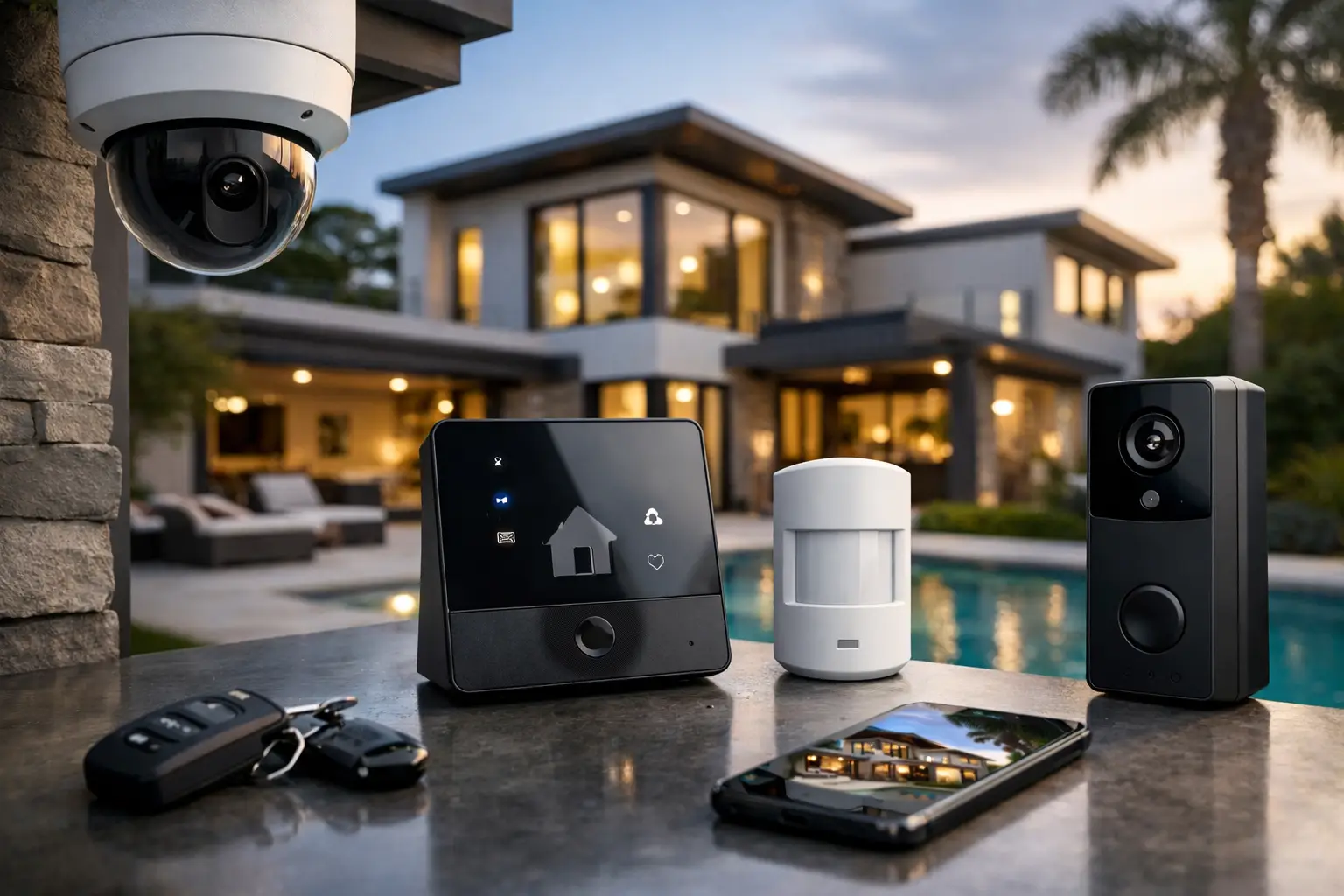
A vacant luxury home rarely announces that it is unattended. A package left too long, an unlit entry, an open side gate, or a small water stain that goes unseen can do that instead. The best vacant home security upgrades protect more than valuables. They preserve privacy, help prevent costly damage, and give an owner a clear line of sight into a residence that deserves careful stewardship.
For seasonal and absentee homeowners, the right approach is not simply adding more devices. It is creating layers: controlled access, early detection, reliable response, and professional oversight that can distinguish a minor alert from a matter requiring immediate attention.
Begin With a Layered Security Plan
A single camera or alarm panel is useful, but it should not carry the full burden of protecting an unoccupied property. Luxury homes often have multiple exterior access points, detached casitas, side gates, pool areas, garages, service entrances, and integrated smart-home systems. Each creates a different exposure.
Start with a property-specific review of how someone could enter, what systems could fail while the home is empty, and which areas would be difficult to monitor from afar. In Scottsdale, Paradise Valley, and Fountain Hills, this review should also account for heat, monsoon weather, landscape irrigation, and the practical realities of homes that may sit vacant through an entire season.
The objective is not to make a residence feel fortified. It is to make it discreetly difficult to access without authorization and easy to supervise when something changes.
Smart Access Control Is One of the Best Vacant Home Security Upgrades
Traditional keys create a quiet but persistent risk. They can be copied, misplaced, retained by former vendors, or left in a lockbox with a code that has not changed in years. For a vacant residence, professionally managed smart locks and access controls offer greater accountability.
Choose systems that allow individual, time-limited access codes for housekeepers, service professionals, guests, and property representatives. A quality setup should record when a code was used and allow access to be removed immediately once work is complete. For gates and garages, similar controls can prevent the common problem of a remote circulating long after a vendor relationship ends.
Smart locks are not a substitute for sound hardware. Exterior doors still need properly aligned strike plates, quality deadbolts, reinforced frames, and reliable weather sealing. A sophisticated lock installed on a poorly secured door only improves one part of the equation.
For homes with frequent vendor visits, establish a clear access protocol. Access should be granted only for a defined service window, confirmed after the appointment, and reviewed if the vendor needs to return. This is especially valuable when the owner is several states away and cannot personally verify who entered the property.
Do Not Overlook Garage and Service Entries
Garage doors and side entrances are often treated as secondary access points, yet they can be the least visible areas of a large property. Add door-position sensors, automatic close notifications, and camera coverage of the garage approach. If the home has a service gate, make sure it locks securely and cannot be opened by an outdated code or remote.
Use Cameras for Verification, Not Constant Surveillance
Well-placed exterior cameras can provide useful evidence and rapid visual verification when an alarm or motion alert occurs. The distinction matters. A camera system should help answer practical questions: Was a delivery made? Did a gate remain open? Is a vendor at the correct entrance? Is there visible storm damage near the pool or roofline?
Prioritize coverage at the front entry, driveway, garage, rear perimeter, side gates, and any area where equipment is stored. Video doorbells can also be helpful, particularly when deliveries are common. For a larger estate, professionally installed cameras with reliable night vision, secure recording, and backup power are generally preferable to a collection of consumer devices installed without a coverage plan.
Interior cameras require more discretion. They may be appropriate in unoccupied common areas or near valuable collections, but they should never compromise the privacy of guests, household staff, or authorized service professionals. If a home is occasionally occupied by family members or renters, clear expectations and careful placement are essential.
Camera alerts should also be configured thoughtfully. Excessive notifications from landscaping crews, wildlife, or passing traffic can lead to alert fatigue. Set activity zones and notification schedules so meaningful events receive attention rather than getting buried among routine motion alerts.
Add Early Detection for Water, Temperature, and Power Issues
Security is not limited to intrusion. In a vacant home, a leaking supply line, failed HVAC system, or power interruption can cause more financial disruption than a break-in. The most valuable upgrades often identify small problems before they become extensive repairs.
Place leak sensors beneath sinks, behind refrigerators, near water heaters, beside washing machines, and in mechanical rooms. Consider a whole-home water shutoff valve that can close automatically when unusual flow is detected. This is a meaningful investment for a seasonal residence, particularly when an unnoticed leak could continue for days.
Temperature and humidity sensors deserve similar attention. Arizona heat places sustained demands on air-conditioning systems, and an HVAC failure can affect finishes, furnishings, wine storage, electronics, and interior comfort. Sensors should alert designated contacts when temperatures move outside a chosen range. A monitored smoke and carbon monoxide system adds another important layer, especially in homes with fireplaces, gas appliances, or attached garages.
Power-loss alerts are equally useful. If a router, gate, refrigerator, pool system, or security panel goes offline, a homeowner needs to know whether the issue is isolated or part of a wider outage. A backup battery and cellular communication option can keep critical security equipment reporting when internet service is interrupted.
Pair Professional Monitoring With a Real Response Plan
A monitored alarm can summon emergency services, but it cannot inspect a roof after a storm, confirm whether a water sensor is accurate, meet a technician, or walk through the home after an event. That is why technology works best alongside a defined local response plan.
Before leaving, identify who receives alerts, who has authorized access, and what should happen after each type of event. A suspected intrusion, water alert, HVAC failure, smoke alarm, and open-gate notification should not all receive the same response. Keep current contact information for trusted vendors, your insurance representative, and a qualified local property oversight provider.
Professional home watch adds the human verification that remote systems cannot provide. During structured inspections, a trained representative can look for conditions cameras may miss: subtle leaks, unusual odors, pest activity, irrigation issues, cracked windows, pool equipment concerns, or signs that an exterior service door is not properly secured. Time-stamped photo reporting provides a documented record of the home’s condition rather than a vague assurance that someone stopped by.
For homeowners who expect white-glove care, I Watch 4 You combines documented property inspections with responsive vendor coordination and return-preparation support. That level of oversight is particularly valuable when an alert requires judgment, not just a notification on a phone.
Protect the Perimeter Without Advertising an Empty Home
An elegant property should remain discreet, but it should not appear abandoned. Exterior lighting with timers or smart scheduling can create a consistent evening presence. Avoid leaving lights on around the clock, which can be as conspicuous as a dark home. Use landscape lighting, entry lighting, and interior lamps selectively to reflect normal occupancy patterns.
Maintain landscaping, pool service, mail handling, and trash procedures throughout the vacancy. Overgrown vegetation, accumulated flyers, or bins left out after collection can signal that no one is paying attention. Gates, fencing, and mature landscaping should also be inspected periodically for storm damage, loose hardware, or visibility gaps.
Be cautious about sharing travel plans publicly. Even casual posts can reveal that a home will be unoccupied for weeks or months. The same restraint applies to giving broad, ongoing access to neighbors or vendors without defined responsibilities.
Invest in Reliability Before Features
The most impressive security dashboard is of limited value if the Wi-Fi fails, batteries are depleted, passwords are shared, or no one knows how to respond to an alert. Review the practical foundation of every upgrade: strong unique passwords, two-factor authentication, current software, tested backup power, and a secure home network separate from guest access.
There is also a trade-off between convenience and complexity. A fully integrated smart-home system may offer excellent control, but it needs professional setup, ongoing maintenance, and a trusted person who can troubleshoot locally. For some residences, a simpler combination of monitored alarm service, smart access, leak detection, exterior cameras, and scheduled inspections is more dependable.
The most reassuring protection is not a home filled with gadgets. It is a home with thoughtful safeguards, documented accountability, and capable local eyes ready to act when conditions change.

