
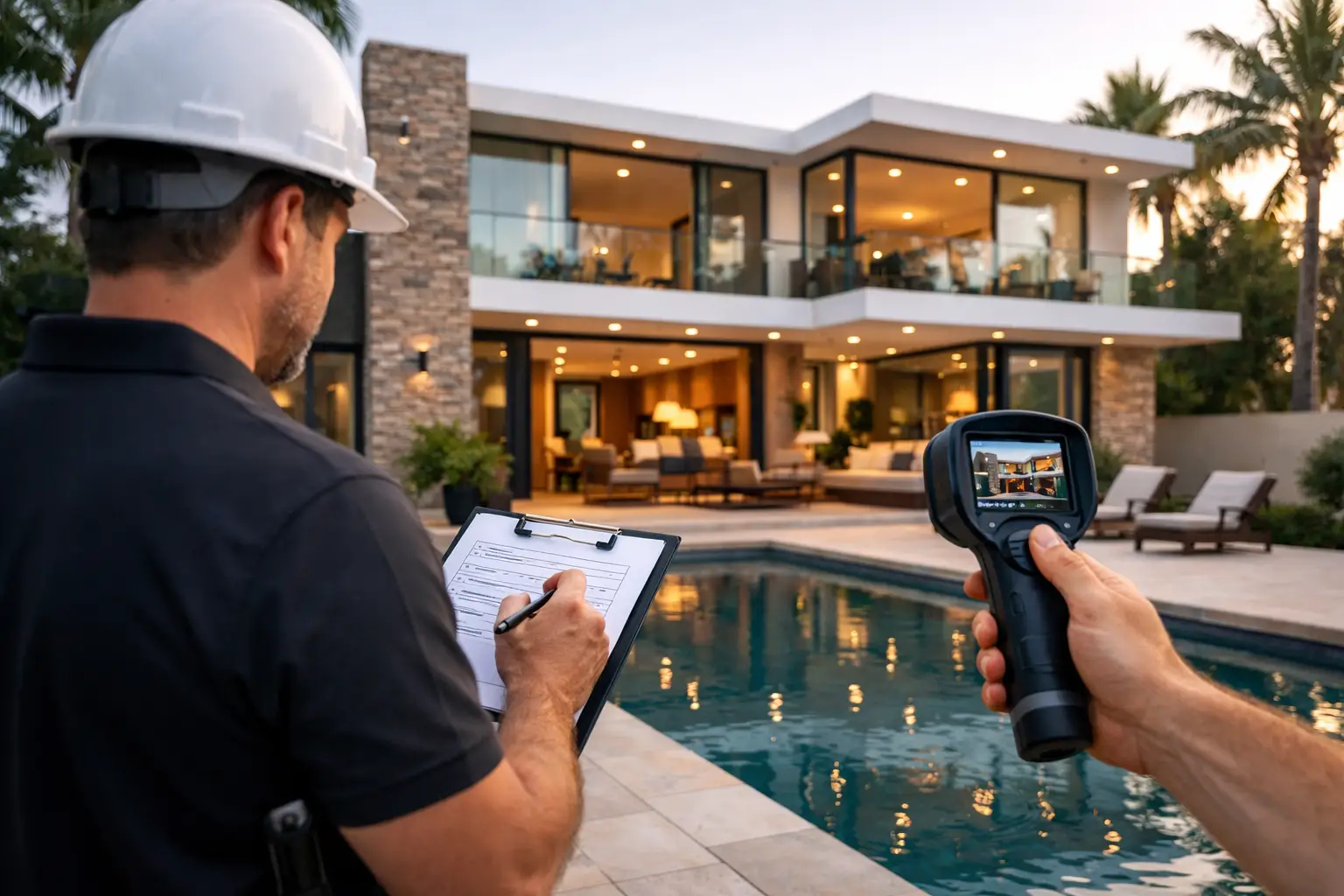
A small drip beneath a guest-bath vanity can become a costly repair long before a returning homeowner notices it. The same is true of an HVAC interruption during a desert cold snap, a failed pool component, or a gate left unsecured after vendor access. For owners who spend weeks or months away, property inspection services provide more than a periodic look around. They create a disciplined system of oversight designed to identify concerns early, document conditions clearly, and protect the standard of the home in your absence.
Why Luxury Homes Need Structured Oversight
A luxury residence has more systems, finishes, and service dependencies than a typical home. Smart-home equipment, climate controls, water features, landscape irrigation, pools, security components, specialty appliances, and high-end interior materials all require attention. When the home is vacant, a minor exception can remain unnoticed until it affects the surrounding space, equipment, or furnishings.
The risk is not limited to dramatic events. A slow irrigation leak may affect landscaping or hardscape. An air-conditioning issue can expose interior finishes to uncomfortable heat and humidity. A tripped breaker may interrupt a refrigerator, water feature, or security-related device. Monsoon weather can leave exterior drainage, roofing, and landscape areas needing prompt review. Each concern calls for a measured response, not guesswork from afar.
Professional oversight also preserves the experience of owning a second home. Rather than spending travel days checking utilities, arranging access, or wondering whether a storm caused damage, owners can arrive to a residence that has been observed, maintained, and prepared with care.
What Property Inspection Services Should Include
The quality of property inspection services is defined by process. A meaningful visit follows a structured inspection plan that is consistent from one appointment to the next. It is not simply a drive-by or an informal walkthrough conducted when someone happens to be nearby.
A thorough interior inspection should consider visible plumbing conditions, signs of water intrusion, HVAC operation, thermostat settings, electrical and appliance concerns, doors and windows, security indicators, and the general condition of living spaces. In an unoccupied home, details matter: an unfamiliar odor, a ceiling stain, a refrigerator alarm, or a change in temperature may be the first visible sign of a larger issue.
Exterior observations are equally essential in Scottsdale, Paradise Valley, and Fountain Hills. A proper visit may include checking entry points, gates, roofline observations from the ground, landscape condition, irrigation indicators, pool and spa equipment, exterior lighting, drainage areas, and obvious storm-related concerns. The precise scope should reflect the property, its systems, and the owner’s preferences.
Just as important is documentation. Time-stamped photos and a detailed report establish accountability. They allow owners to see what was observed, understand what action was recommended, and retain a reliable record of the home’s condition over time. This is especially valuable when a vendor must be dispatched or when an owner wants confirmation that a prior concern has been resolved.
Early Detection Changes the Cost of a Problem
The greatest value of professional property oversight is often found in what does not become an emergency. Water is the clearest example. A visible leak caught during a scheduled visit may require a plumber and a contained repair. The same leak left undetected can affect cabinetry, flooring, drywall, and personal belongings.
Climate control presents another common concern. Arizona homes can endure substantial heat, and a mechanical issue during an extended absence can place unnecessary strain on interiors and systems. Detecting an irregular thermostat reading or equipment alert early gives the owner options. A trusted local professional can document the condition, coordinate the appropriate service provider, and communicate the next step without requiring the homeowner to manage every detail from another state or country.
Early detection does not mean every observation requires urgent action. Premium service is also about judgment. A qualified home watch professional distinguishes between a condition that needs immediate attention, a maintenance item that can be scheduled, and a note that simply gives the owner useful visibility. That discretion helps prevent both costly delays and unnecessary disruption.
Documentation Is a Standard of Care
For absentee homeowners, reassurance should be supported by evidence. A brief text stating that everything looks fine may feel comforting, but it does not provide much context if a question arises later. A structured report, supported by photos and inspection notes, shows the work that was performed and the property condition observed on that date.
Documentation is particularly valuable after storms, during periods of extreme weather, or following vendor work. It creates a clear chain of communication: what was found, when it was found, what response was authorized, and whether the issue appeared resolved during a follow-up visit. This level of reporting allows homeowners to remain informed without becoming consumed by routine property management.
At I Watch 4 You, structured inspections supported by HomeWatchIT® reporting bring that visibility to each visit. The objective is straightforward: give owners a precise, dependable record of their home while preserving the discretion expected in high-value residences.
Vendor Coordination Requires Trusted Local Presence
Even the best inspection process occasionally reveals a need for service. A homeowner may have a preferred plumber, pool technician, HVAC company, or landscaper, but someone still needs to provide access, receive the vendor, communicate the concern accurately, and confirm that the work area is left in appropriate condition.
Vendor coordination is where a white-glove property oversight relationship becomes especially useful. Instead of arranging a key exchange from across the country or relying on a neighbor to wait for an uncertain service window, owners have a local point of contact who understands the home and can act with clear authorization.
There are practical boundaries to consider. A home watch provider should not replace a licensed trade professional or make technical repairs outside their scope. Their role is to observe, document, coordinate, and follow through. That distinction protects the homeowner while ensuring the right specialist is engaged when expertise is required.
Choosing the Right Level of Service
Not every vacant property needs the same inspection schedule. The appropriate frequency depends on the length of absence, the home’s age and complexity, the season, the presence of a pool or water feature, landscaping requirements, and the owner’s comfort level. A condominium with building-managed exterior systems may need a different plan than a large estate with extensive grounds and independent equipment.
The right provider should be willing to discuss those variables rather than offering a one-size-fits-all promise. Ask how inspections are documented, what happens when an issue is discovered, how vendor access is managed, and whether the service can support return preparation. Clear answers reveal whether the company operates with a repeatable standard or relies on informal check-ins.
Privacy should also be central to the relationship. Luxury homeowners need a service provider who treats access to the residence as a responsibility, maintains careful communication, and understands that discretion is part of the service itself. Trust is earned through consistency: arriving as scheduled, noticing details, reporting accurately, and responding appropriately when circumstances change.
A Home Should Be Ready Before You Arrive
A property can be technically secure and still not feel ready for its owner. Return-preparation concierge support bridges that gap. Depending on the plan, it may include arranging housekeeping, coordinating service appointments, confirming climate settings, stocking requested essentials, or ensuring the home is presented as expected before arrival.
This service is especially meaningful after a long seasonal absence. Owners should be able to open the door to a home that feels cared for, not begin their stay with a list of inspections and phone calls. The goal is not extravagance for its own sake. It is the quiet confidence that details have been handled with the same care you would expect if you were there.
A well-managed home watch relationship gives you a clearer view of your property without asking you to manage it from a distance. Before the next extended departure, consider the systems, finishes, and personal standards your home deserves – then choose oversight that reflects them.

