
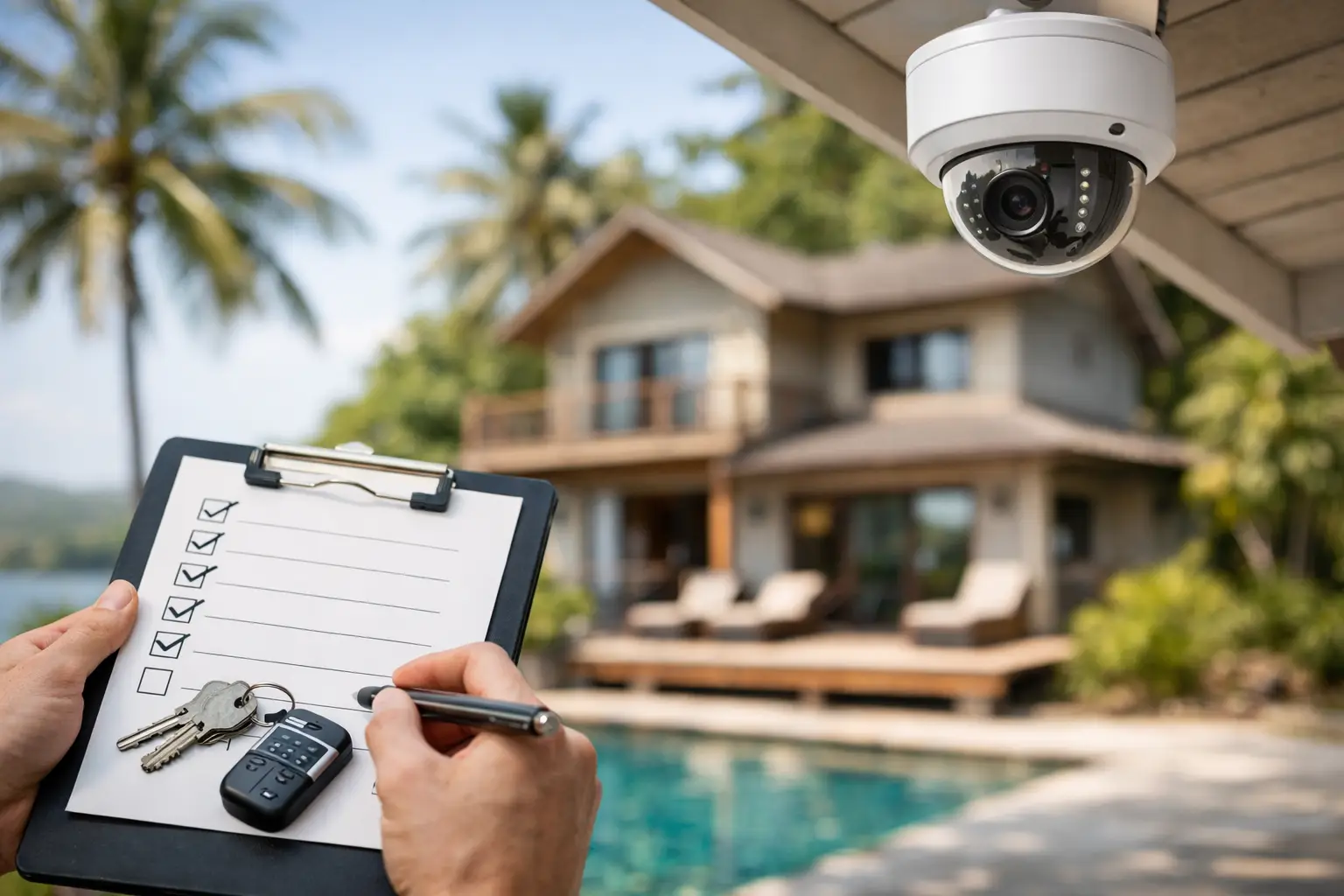
A vacant luxury home rarely looks vulnerable from the street. The landscaping may be immaculate, the lighting elegant, the finishes substantial. Yet extended absence changes the risk profile of any property, especially when no one is regularly verifying what is happening inside and out. A thoughtful second home security checklist is not about adding more gadgets. It is about reducing exposure, documenting conditions, and making sure small issues are addressed before they become expensive ones.
For seasonal homeowners, the real concern is rarely one dramatic event alone. It is the accumulation of preventable problems – a minor leak behind a wall, a garage door left unsecured after vendor access, a tripped breaker that disables climate control, a storm-damaged gate that quietly compromises perimeter security. The most effective protection comes from layered oversight, not assumptions.
What a second home security checklist should actually cover
Many homeowners think of security in narrow terms such as alarms, cameras, and locks. Those matter, but an unattended residence requires a broader standard of protection. Security includes who has access, whether systems are functioning, whether the property appears occupied and cared for, and whether someone trustworthy would notice a change quickly.
That is especially true in upscale communities, where homes may contain wine rooms, custom finishes, extensive outdoor living areas, smart-home infrastructure, detached casitas, and high-value furnishings. Each feature adds comfort when you are home and another point of failure when you are not.
A useful checklist should therefore cover five areas: physical access, visible deterrence, system reliability, environmental risk, and human oversight. If one of those areas is weak, the others can only compensate so much.
Start with access control and physical security
The first priority is simple: know exactly how someone could enter the property, and who can do so legitimately. Exterior doors, sliders, side gates, service entrances, garage access points, and pool gates should all be reviewed before departure. This sounds basic, but second homes often have more access points than primary residences, particularly in larger Scottsdale and Fountain Hills properties where indoor-outdoor design is part of the appeal.
Keys, fobs, keypad codes, and garage remotes deserve the same attention. If a former vendor, housekeeper, guest, or contractor still has access, security is already compromised. Recode locks or update digital access credentials whenever there is any uncertainty. For many homeowners, this is where discretion and professionalism matter most. Access should be controlled, documented, and limited to trusted parties with a clear reason to be there.
It also helps to think beyond the front door. Ground-floor windows, privacy walls, rear courtyards, and side-yard gates are often less visible than the main entrance. A home can look perfectly secure from the street while remaining surprisingly exposed elsewhere.
Small details that change the risk level
A security checklist should include checks for door alignment, latch integrity, functioning deadbolts, and garage door closure confirmation. If a lock sticks or a door does not fully seal, that is not a cosmetic issue. It is an invitation for neglect to become vulnerability.
The same applies to gate hardware, fence lines, and secondary structures. A detached guest house or golf cart garage can be overlooked for months if no one is conducting structured inspections.
Make the home look actively managed
One of the clearest signs of a vacant home is inconsistency. Lights never change. Deliveries accumulate. Landscaping drifts. Outdoor furniture stays untouched through weather shifts. Nothing announces absence faster than a property that appears static.
Good security therefore includes presentation. Timed or smart lighting should create a natural pattern, especially in visible living areas and at primary entry points. Landscape maintenance should remain on schedule. Mail, flyers, and packages should never be left to collect. Window coverings should be positioned intentionally, not closed in a way that signals long-term vacancy.
There is a balance here. Overstaging occupancy can become obvious if done poorly. The goal is not theatrical activity. It is a home that appears attended, orderly, and under professional property oversight.
In luxury communities, appearance carries another function: it reassures neighbors, HOA staff, and patrol personnel that the property is being cared for. That can prompt earlier reporting if something seems off.
Confirm every security system is fully operational
Technology helps, but only when it is maintained. Many second-home owners assume their alarm, cameras, and smart-home features will simply keep working in their absence. In practice, low batteries, software glitches, weak Wi-Fi coverage, power interruptions, and outdated contact lists are common points of failure.
Your checklist should include alarm testing, camera review, remote access verification, motion sensor checks, and confirmation that monitoring contacts are current. If an alert goes to an old phone number or former assistant, the system may be technically active while functionally useless.
It is also wise to review what your cameras actually cover. Many properties have strong visibility at the front entry and very little coverage around side yards, service gates, pool equipment areas, or rear patio doors. Camera placement should match realistic points of exposure, not just obvious ones.
Smart home convenience can create blind spots
Luxury homes often include integrated controls for locks, shades, thermostats, lighting, irrigation, and AV systems. This can be a major advantage, but it also creates dependency on apps, passwords, and stable connectivity. If one platform fails, several protective functions may fail with it.
That does not mean smart systems are a mistake. It means they need periodic verification and a backup plan. If remote access drops, who local can confirm the actual condition of the home? That question is where many checklists fall short.
Include environmental and maintenance risks in the checklist
For an unattended residence, water is often a greater threat than forced entry. A slow leak, failed water heater, clogged condensate line, or irrigation problem can cause substantial damage long before anyone notices. HVAC issues, electrical failures, pest activity, and monsoon-related exterior damage belong on a security checklist because they affect the safety and integrity of the property.
Before leaving, homeowners should review shut-off procedures, leak detection devices, HVAC settings, surge protection, and irrigation scheduling. Refrigerators, ice makers, washing machine supply lines, and water filtration systems are worth particular attention. If you will be away for months, it may make sense to shut off water to select fixtures or to the home entirely, depending on the property and season.
This is where a one-size-fits-all checklist can become misleading. A lock-and-leave condo with building oversight has different needs than a custom home with a pool, outdoor kitchen, multiple mechanical systems, and extensive landscaping. Security planning should reflect how the home is built and how long it will sit unattended.
The most overlooked item is who verifies the property in person
A second home can have excellent locks, polished cameras, and monitored alarms and still remain exposed if no one performs consistent in-person checks. Technology reports events. Professional oversight catches conditions. There is a difference.
Structured inspections provide something remote monitoring cannot: context. Is the side gate slightly ajar because of wind, or because someone accessed the yard? Is a small ceiling stain new? Is the AC running but not cooling properly? Has a vendor completed work and fully secured the home afterward? These are judgment calls, and judgment requires a trained set of eyes on site.
For absentee homeowners, this is often the deciding factor between basic security and true peace of mind. A documented inspection process with time-stamped photo reporting creates accountability. It also shortens response time when something needs attention, whether that is a plumbing issue, a break-in concern, or coordination with a trusted vendor.
In high-value homes, that level of white-glove oversight is not excessive. It is prudent. Companies such as I Watch 4 You are built around this exact need: precision, discretion, and regular property verification that goes well beyond a casual walkthrough.
A practical second home security checklist before you leave
Before departure, confirm all entry points lock securely, update codes and access permissions, test the alarm and camera system, set lighting schedules, stop mail or arrange collection, verify landscape service, inspect for leaks or maintenance concerns, review thermostat and water settings, and document the home’s condition. Just as important, designate a trusted local point of contact who can respond quickly if something changes.
That final step matters more than most owners expect. The best checklist is not merely a set of tasks completed once. It is a standard of care that continues while you are away.
A well-kept second home should feel exactly that when you return – well kept, protected, and ready for you, not waiting with a list of unpleasant surprises.

