
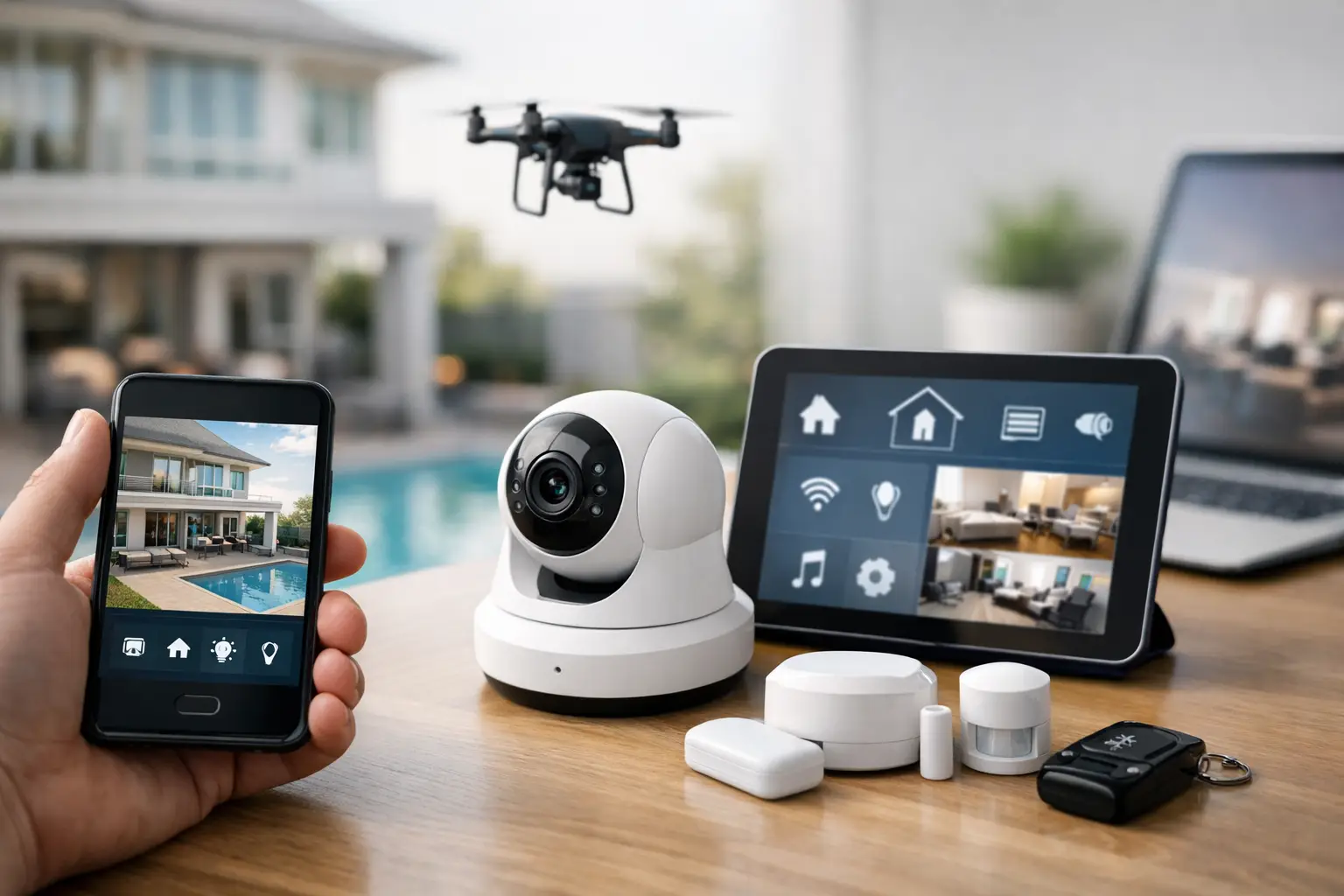
A luxury home can look perfectly still from the street while a small problem is already building inside. A slow leak under a sink, a tripped breaker affecting climate control, or a vendor visit that was never properly documented can all turn into costly issues when no one is watching closely. That is where technology that elevates home watch becomes more than a convenience. It becomes part of a disciplined protection strategy.
For homeowners who spend weeks or months away, ordinary check-ins often leave too much to interpretation. A quick walkthrough may confirm that doors are locked and lights are off, but it rarely provides the kind of precision high-value properties require. Better home watch is not simply about being present. It is about documenting conditions, identifying changes early, and creating a clear record of what was seen, when it was seen, and what happened next.
What technology that elevates home watch really changes
The most meaningful shift technology brings to home watch is accountability. In a premium service model, inspections should never rely on memory alone or vague updates such as everything looks fine. Structured digital systems create consistency from one visit to the next, which matters greatly when a property has multiple systems, detailed finishes, and a wide perimeter to oversee.
When inspections are guided by a purpose-built platform, each visit follows an organized process. Interior and exterior checkpoints are documented in sequence. Time-stamped notes and photos support the findings. If something appears out of place, the record is immediate and specific rather than general. That level of detail gives homeowners confidence because it replaces uncertainty with evidence.
This also improves continuity over time. A luxury residence is not static. Conditions change with weather, irrigation cycles, HVAC usage, pest activity, construction nearby, and simple wear. Technology makes it easier to compare one inspection against prior visits and spot patterns before they become expensive repairs.
Precision matters more than gadgets
Not all technology adds value. For luxury homeowners, the goal is not a stack of apps or flashy devices. The goal is better professional property oversight.
The right technology supports a structured inspection process rather than distracting from it. That distinction matters. A home can be full of smart devices and still be poorly watched if no one is applying trained judgment to what they see. On the other hand, a disciplined home watch professional using a specialized reporting platform can deliver a far higher level of protection because every inspection is methodical, documented, and reviewable.
That is why the strongest technology in this category often works quietly in the background. It helps ensure that no checkpoint is missed, no observation is left undocumented, and no concern disappears into a text thread. It reinforces white-glove service through process.
Digital reporting raises the standard
For absentee owners, one of the greatest frustrations is not knowing the true condition of the home between visits. Detailed digital reporting answers that concern directly.
A professionally prepared report with time-stamped photos does more than show that someone stopped by. It demonstrates what was inspected, what condition it was in, and whether follow-up was needed. That record is useful in the moment, but it also becomes valuable later if a maintenance issue develops, a vendor question arises, or an insurance-related concern requires a timeline.
There is also a practical emotional benefit. Homeowners do not want to spend time away wondering whether a property was checked thoroughly. Clear reporting creates reassurance because it is concrete. The standard is visible.
Faster response, with less ambiguity
Technology also improves response time when something is wrong. If an inspector identifies a concern during a visit, digital documentation allows the issue to be captured and communicated quickly, often with photos that remove guesswork. A homeowner is not left trying to interpret a vague message about possible water intrusion or exterior damage.
This does not mean every issue demands alarm. In fact, one mark of premium home watch is knowing the difference between a minor observation, a maintenance item, and an urgent problem. Technology helps frame that distinction clearly. The report shows what was found, and the service team can coordinate the appropriate next step with precision.
For luxury properties, that clarity is especially important. High-end finishes, custom millwork, stone surfaces, specialty lighting, and integrated mechanical systems often require timely and informed handling. Delays are costly, but overreaction can also be disruptive. Good systems support measured, prompt decisions.
Where smart home systems fit – and where they do not
Many second-home owners assume smart home technology can replace professional home watch. It can certainly help, but it is not the same thing.
Sensors, cameras, thermostats, leak detectors, and automated alerts can provide useful signals. They may indicate a door opening, an indoor temperature shift, or moisture near a fixture. Those tools can reduce the time between an incident and an alert. For some homes, especially those left vacant for long stretches, they are a sensible layer of protection.
But these systems have limits. Sensors can fail. Alerts can be triggered by false positives. Camera views are selective. A thermostat may tell you the temperature changed, but not why. Most important, smart devices do not interpret conditions throughout the property with trained human judgment. They do not notice subtle drywall staining, evaluate whether landscaping stress suggests an irrigation issue, or confirm that a vendor completed work to expectation.
The strongest model is usually a combination of both. Smart home tools can provide additional awareness, while a professional home watch service provides physical verification, structured inspections, and informed follow-through. One supports the other.
Technology that elevates home watch for concierge-level care
For discerning homeowners, the real advantage of technology appears when it supports not only inspections, but also service coordination. A well-documented inspection platform becomes a practical foundation for concierge-level oversight.
If a concern is identified, accurate records make vendor coordination cleaner and more efficient. The issue can be described precisely. Photos can be reviewed. Access can be managed with clear context. After the work is completed, a follow-up inspection can confirm the result and document the updated condition.
This matters when owners are away and do not want to manage every detail remotely. They want trusted local oversight that keeps standards high without requiring constant involvement. Technology makes that possible when it is paired with a service team committed to responsiveness and discretion.
In premium communities, where homes often include multiple zones, outdoor living features, water elements, and specialized systems, that coordination becomes even more valuable. There are simply more points where small issues can develop quietly.
Why documentation protects more than the property
Detailed records also protect the homeowner’s time. Without documentation, every absence invites follow-up questions. Was the patio checked after the storm? Did the vendor actually arrive? Was that stain already there last week? Did someone verify the thermostat settings after service?
When inspections are consistently documented, those questions are easier to answer. The homeowner is not pulled into unnecessary uncertainty. They receive a reliable record, and that record supports confident decisions.
For many luxury homeowners, this is one of the most understated benefits of advanced home watch systems. They reduce friction. The property stays under professional oversight, and the owner is free to focus elsewhere.
The trade-off: technology is only as good as the people behind it
There is one point worth stating plainly. Technology can raise standards, but it does not create standards by itself.
A weak service model with a polished app is still a weak service model. If inspections are rushed, if observations are superficial, or if follow-up is inconsistent, software will not solve the core problem. The quality of home watch still depends on discipline, training, judgment, and accountability.
That is why discerning homeowners should look beyond claims about tools and ask what those tools are actually supporting. Is the inspection process structured? Are reports detailed and time-stamped? Is there a documented system for follow-up? Is the service designed around precision, not just presence?
When the answer is yes, technology becomes a meaningful differentiator. It supports a level of care that feels measured, transparent, and worthy of a luxury property.
For homeowners in Scottsdale, Paradise Valley, and Fountain Hills, where seasonal absences are common and property standards are high, this approach is especially relevant. A residence of that caliber deserves more than informal check-ins. It deserves professional oversight backed by documentation and prompt action. That is the standard I Watch 4 You was built to deliver.
The most reassuring technology is not the kind that calls attention to itself. It is the kind that quietly strengthens every inspection, every report, and every response so your home is protected with the same precision you would expect if you were there yourself.

