
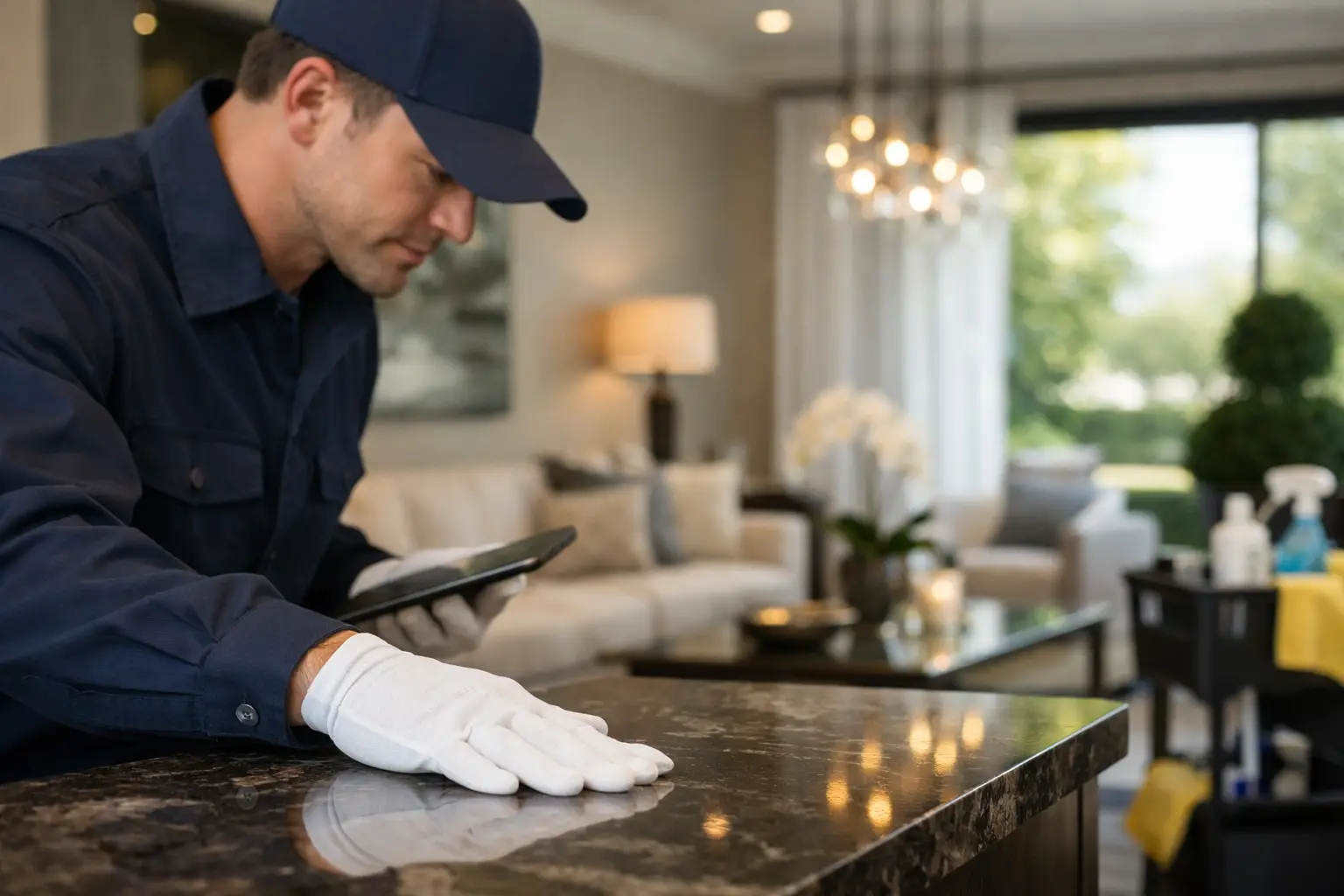
A luxury home can look perfectly composed from the street while a small issue develops quietly inside. A slow leak under a sink, an HVAC fault during extreme heat, or a vendor visit handled without oversight can turn an unattended property into an expensive problem. That is where white glove property care earns its place – not as a cosmetic upgrade, but as a higher standard of professional property oversight.
For homeowners who spend weeks or months away, the real question is not whether someone can stop by. It is whether anyone is watching with enough precision to catch what matters early, document it clearly, and respond in a way that protects the home without creating more work for the owner.
What white glove property care actually includes
White glove property care is often misunderstood as a polished version of a basic house check. In reality, the difference is structural. It is built on process, accountability, and discretion.
A true white-glove approach starts with structured inspections rather than casual walkthroughs. Each visit follows a defined scope that covers the home’s interior and exterior, checks visible systems and conditions, and looks for early signs of trouble. That might include water intrusion, HVAC irregularities, storm impact, pest activity, appliance concerns, or signs that a vendor repair was not completed properly.
Just as important, the service does not end with observation. It includes time-stamped reporting, photo documentation, and communication that tells the homeowner exactly what was checked, what was found, and what action, if any, is recommended. In a luxury property, details matter. So does proof.
The final layer is coordination. If an issue arises, white glove property care means there is a professional point of contact available to manage access, meet vendors, verify work, and help maintain continuity while the homeowner is away. That keeps the home protected and spares the owner from long-distance guesswork.
Why standard home checks often fall short
Many absentee homeowners assume any recurring visit is enough. Sometimes it is. Often, it is not.
A basic check may confirm that the house is standing, the doors are locked, and nothing looks obviously wrong. For some properties, that level of attention may be acceptable. But for a high-value residence with sophisticated systems, custom finishes, climate sensitivity, and active service vendors, surface-level oversight leaves too much room for missed detail.
The trade-off usually comes down to cost versus accountability. Basic checks may be less expensive, but they tend to rely on informal routines, limited documentation, and reactive communication. When something goes wrong, homeowners can be left asking when the issue started, whether it was visible during earlier visits, and who is coordinating next steps.
White glove property care is designed to reduce that uncertainty. It creates a documented record, a consistent inspection standard, and a clear chain of responsibility. For owners who are gone for extended periods, that difference is more than convenience. It is risk management.
White glove property care for luxury homes
Luxury properties require a different level of oversight because they present a different level of exposure. Larger footprints, multiple HVAC zones, custom cabinetry, premium flooring, smart home technology, and outdoor features such as pools, water elements, and covered patios all increase the number of things that can drift out of order while no one is there to notice.
In desert markets such as Scottsdale and Fountain Hills, environmental conditions add another layer. Prolonged heat, monsoon weather, dust, irrigation issues, and rapid storm activity can affect both exterior condition and interior systems. A property may appear fine one week and need immediate attention the next.
That is why a luxury-focused service should be methodical rather than casual. The goal is not to create alarm around every minor irregularity. The goal is to know the difference between a routine maintenance item and an issue that could escalate if left unattended.
Discretion also matters. Affluent homeowners are not simply looking for access management. They want trusted oversight delivered professionally, quietly, and with respect for privacy. The best providers understand that they are not just entering a house. They are safeguarding a private residence, often in a high-profile community, where standards are naturally higher.
The role of documentation and reporting
One of the clearest markers of premium property oversight is documentation. Without it, a homeowner is being asked to rely on reassurance. With it, they have visibility.
Clear reporting turns a recurring service into an accountable one. It confirms that the inspection happened, shows conditions at the time of the visit, and gives the owner a practical record of the property while they are away. Photo-backed, time-stamped updates can also be useful when coordinating maintenance, validating vendor completion, or tracking whether an issue is isolated or recurring.
This is especially valuable for seasonal residents who may be gone for several months at a time. They do not want a vague message that everything “looks good.” They want professional confirmation that the home was checked with care and that anything requiring attention was identified promptly.
At I Watch 4 You, that level of structure is central to the service model. A documented inspection process creates confidence because it replaces assumptions with evidence.
Concierge support is part of the value
The most effective white glove services recognize that home protection does not happen in isolation. It often involves gate access, service appointments, repair scheduling, and return preparation.
This is where concierge support becomes meaningful. If a leak is detected, someone needs to coordinate access and ensure the right professional is brought in quickly. If a storm affects the property, someone should verify conditions on-site rather than asking the owner to manage the situation from another state. If the homeowner is returning for the season, someone can help make sure the home is properly prepared, systems are operating, and the residence feels ready rather than neglected.
Not every homeowner needs that level of involvement every month. But when it is needed, it becomes one of the most practical features of white glove care. It shortens response time, reduces owner stress, and keeps decisions grounded in what is actually happening at the property.
Choosing the right level of oversight
Not every property needs the same service cadence or scope. A lock-and-leave condo with limited exterior responsibility may need a different plan than a large custom home with multiple systems and extensive grounds. The right fit depends on how long the home sits vacant, how complex the property is, and how much direct owner involvement is realistic while away.
What matters most is consistency. A premium service should be predictable, well defined, and responsive when conditions change. Homeowners should know what is being inspected, how findings are reported, and what happens if something needs immediate attention.
It is also worth asking how a provider handles nuance. Do they simply report issues, or do they help move resolution forward? Do they know the expectations of luxury communities? Do they communicate in a way that is organized and useful, rather than vague or overly casual? Those distinctions tend to separate true professional oversight from a basic errand service.
Peace of mind is earned, not promised
The phrase “peace of mind” appears in nearly every property care conversation, but it should not be treated as a slogan. Peace of mind is the result of a disciplined process carried out consistently over time.
That process includes trained observation, structured inspections, documented reporting, discretion, and prompt coordination when something needs attention. It respects the fact that a second home or seasonal residence is not only a valuable asset, but also a place tied to comfort, routine, and personal standards.
White glove property care is ultimately about preserving normalcy for homeowners who are away. The home remains monitored, issues are addressed early, and return visits feel smooth rather than uncertain. When that standard is met consistently, the homeowner is free to be elsewhere without wondering what is happening back home.
For discerning owners, that is the real value: not a quick check, but the confidence that their property is being watched with the same care they would expect if they were there themselves.

