
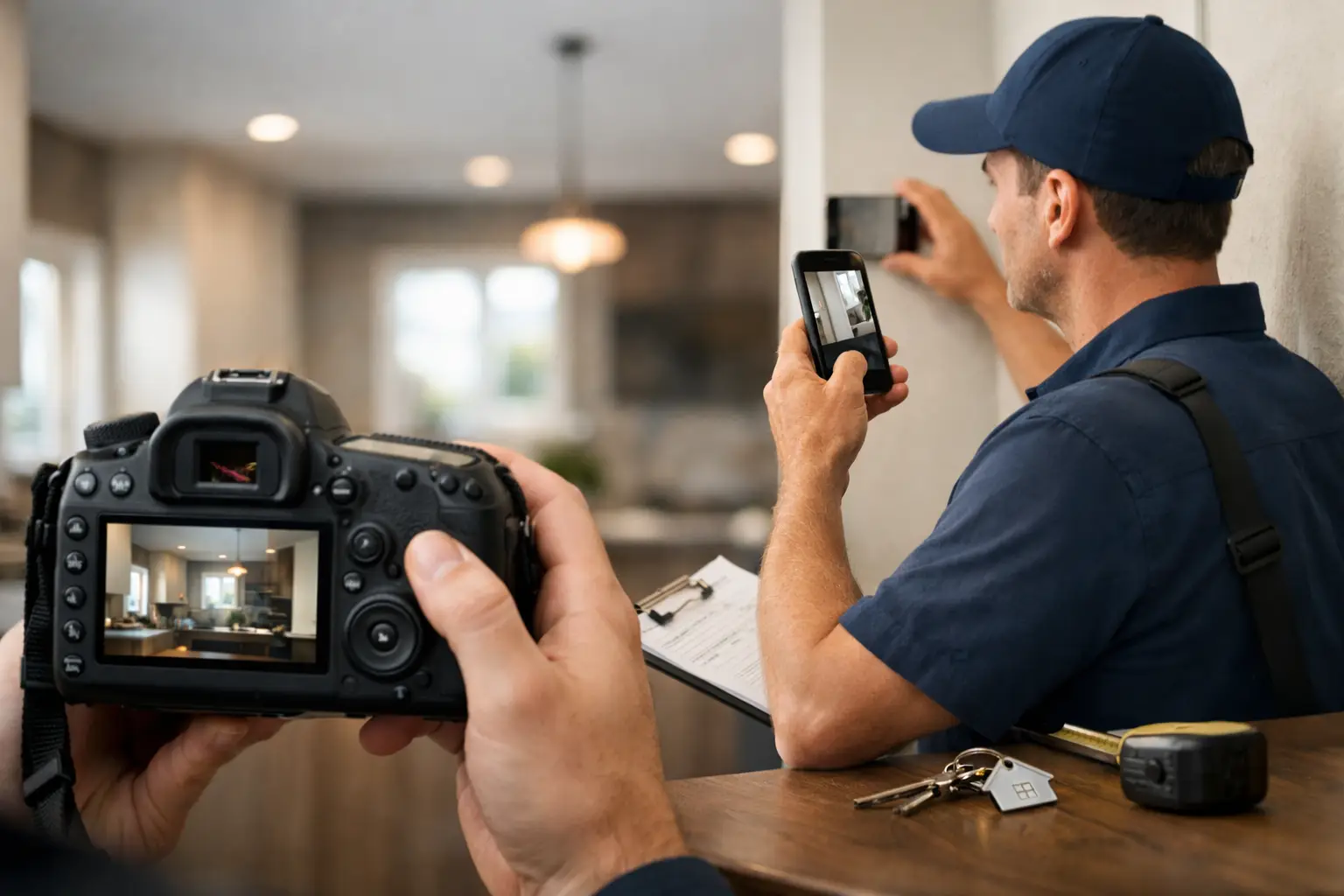
A luxury home can look perfectly fine from the street while a small interior issue is already becoming expensive. A slow leak under a sink, an HVAC alert, a tripped GFCI outlet, or early signs of storm intrusion rarely announce themselves in dramatic fashion. That is why time stamped photo home inspections matter so much for absentee owners. They turn property oversight from a vague reassurance into documented proof of condition, timing, and follow-through.
For owners who spend part of the year away, the real concern is not simply whether someone visited the home. It is whether that visit was structured, whether conditions were properly observed, and whether there is a clear record of what was seen. In higher-value properties, that distinction matters.
What time stamped photo home inspections actually provide
At a basic level, a time-stamped photo confirms that an image was captured at a specific moment during an inspection. In practice, that detail carries far more weight than many homeowners realize. It establishes when the property was checked, what condition it was in at that time, and whether any concern appeared to be new, ongoing, or resolved.
For a seasonal resident, this creates a reliable chain of accountability. If a ceiling stain appears in one report but not the prior one, timing becomes clearer. If a vendor says an issue was addressed, updated inspection photos can help verify the result. If a homeowner wants to understand the condition of the property before returning, the report offers something more useful than a verbal update. It offers visual documentation.
This is especially important in luxury homes, where finishes, furnishings, mechanical systems, and exterior features often require a more discerning eye. A generic walkthrough may reassure, but documented inspections support decisions.
The difference between a walkthrough and professional oversight
Not all property checks are equal. Some are informal visits that confirm the doors are locked and the lights are off. That may be enough for a vacant rental or a short absence. It is usually not enough for a custom home, seasonal residence, or upscale condo left unattended for weeks or months.
Professional property oversight follows a structure. The inspector is not simply stopping by. They are checking specific systems and visual indicators, assessing interior and exterior conditions, and recording what they find in a consistent way. When time-stamped photography is part of that process, the inspection becomes far more credible.
This matters because memory is imperfect, and casual updates tend to be selective. A homeowner might hear, “Everything looks good,” without knowing whether the patio drain was checked after a storm, whether the water heater area was inspected, or whether signs of minor deterioration were documented before they became larger problems.
Structured reporting reduces ambiguity. It also raises the standard of care.
Why documentation matters more in luxury homes
Higher-end homes often include more points of vulnerability, not fewer. Multiple HVAC zones, custom cabinetry, smart home systems, wine storage, water features, expansive windows, specialty finishes, and outdoor living spaces all add comfort and value. They also create more areas where early issues can develop quietly.
A documented inspection process helps protect that investment. If an inspector notices unusual condensation, evidence of pest activity, a change in pool or landscape conditions, or signs of weather-related wear, time-stamped photos provide context. They can show whether the issue appears isolated or progressive and whether immediate action is warranted.
There is also a practical side to this for owners who expect discretion and efficiency. Clear photo documentation reduces back-and-forth. Instead of trying to interpret a vague description from afar, the homeowner can review the report and decide quickly whether to authorize further service.
That level of clarity is part of white-glove oversight. It respects the owner’s time while protecting the home.
Time stamped photo home inspections and faster response
One of the strongest advantages of time stamped photo home inspections is speed of decision-making. When an issue is documented clearly, response tends to be faster and more precise.
Consider a minor roof or window intrusion after a monsoon storm. Without photos, the owner may receive a text saying there is “some water” near a wall or ceiling. That description leaves too much room for interpretation. With time-stamped images, the scale, location, and visible severity are easier to assess. A vendor can be dispatched with better information, and the homeowner has a clearer record of what was observed before repairs begin.
The same is true for appliance leaks, garage issues, battery failures, irrigation concerns, and visible wear around doors or windows. The report does not replace a specialist diagnosis, but it helps establish what was found and when. That often shortens the path from discovery to action.
In communities such as Scottsdale and Fountain Hills, where many owners are away during parts of the year, response time is not a small operational detail. It can be the difference between a contained maintenance issue and a more disruptive repair.
What discerning homeowners should look for
The presence of photos alone is not enough. Plenty of services send a few snapshots, but that does not automatically mean the inspection was thorough. The better question is how the photos fit into a disciplined reporting process.
Homeowners should look for consistency, not just quantity. Are reports tied to scheduled visits? Are the images clearly connected to observed conditions? Is there written context that explains why a photo matters? Does the inspection process appear tailored to actual property risks, or is it generic?
It also helps to understand the limits of any inspection. A visual inspection does not see inside walls, predict every failure, or replace licensed technical work. Good oversight is valuable because it catches visible changes early and creates a documented record, not because it eliminates every possible risk. A trustworthy provider will understand that distinction and communicate it clearly.
For high-value homes, the ideal standard is disciplined observation paired with responsive coordination. Documentation is strongest when it supports action rather than simply filling a report with images.
The role of accountability in absentee ownership
When you are hundreds or thousands of miles away, trust becomes operational. You need to know not only that someone is attentive, but that the attention is verifiable. Time-stamped reporting supports that expectation in a very practical way.
It creates accountability for the inspection itself. It also creates accountability across the broader care of the property. If a vendor was scheduled to address a concern, follow-up photos can help confirm access and visible completion. If a condition appears unchanged, that becomes easier to identify. If something new appears between visits, the timeline is more defined.
For absentee homeowners, this reduces the burden of managing details remotely. You are not left wondering what was done, when it happened, or whether a concern is getting better or worse. You have a record.
That record can also be reassuring before arrival. Many owners want their home to feel fully ready when they return, not like a list of surprises waiting to be discovered after unpacking. A well-documented inspection program supports that outcome by identifying concerns in advance and making return preparation more controlled.
Why process matters as much as technology
Technology improves reporting, but technology by itself is not the service. A photo is only as useful as the judgment behind it. A polished report still depends on whether the inspection was careful, methodical, and responsive to the home’s specific needs.
That is where process matters. A refined home watch service does not rely on occasional convenience checks. It uses structured inspections, professional documentation, and consistent follow-through to protect the property over time. At that level, time-stamped imagery is not a marketing feature. It is evidence of precision.
For homeowners who expect elevated care, that difference is easy to appreciate. The goal is not to create more reports. The goal is to create more confidence.
I Watch 4 You builds that confidence through structured inspections and detailed reporting designed for homeowners who expect accountability, discretion, and immediate clarity while away.
A home that is left unattended does not need casual attention. It needs careful oversight that shows what was checked, when it was checked, and what needs to happen next. That is the quiet value of documented inspections: fewer assumptions, better decisions, and a home that remains protected even when you are not there to see it yourself.

