
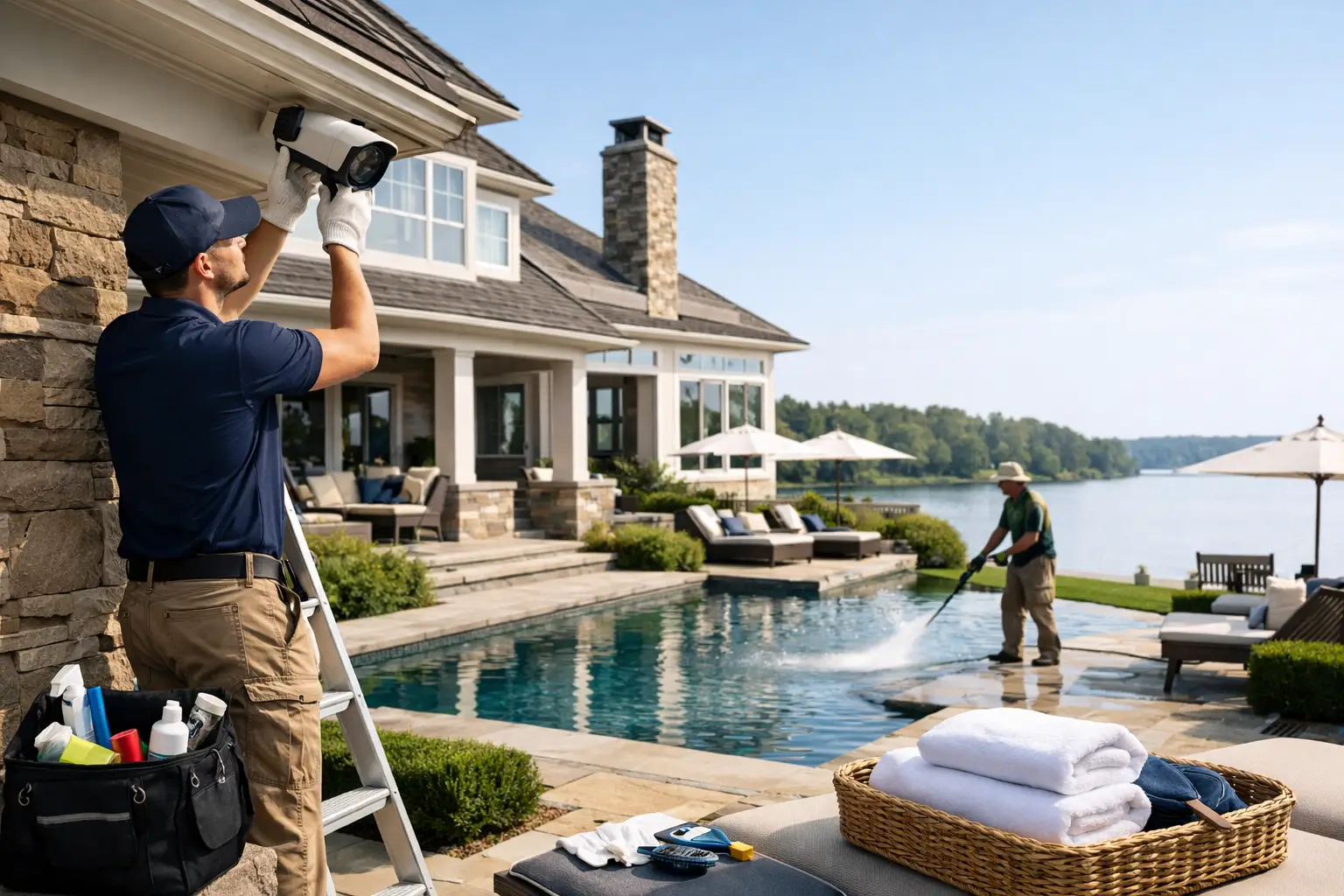
A luxury residence should not become an unanswered question the moment its owners leave town. Luxury seasonal home services provide the disciplined local oversight that protects a valuable property when no one is there to notice a slow leak, an air-conditioning alert, storm debris, or an unexpected vendor issue. For owners who divide their time between Arizona and another home, confidence comes from knowing precisely what is being checked, when it was checked, and what was found.
A basic walkthrough may create the appearance of coverage. Professional property oversight is different. It is a structured, accountable process designed to identify early warning signs, document conditions clearly, and coordinate a response before a small concern becomes a disruptive repair.
What Luxury Seasonal Home Services Should Deliver
The standards for a seasonal residence are higher than those for an ordinary vacant home. Fine finishes, climate-sensitive interiors, sophisticated systems, landscaped grounds, pools, and high-value belongings all require attentive observation. The right service is not simply present at the property. It understands what deserves attention and treats every visit as a documented responsibility.
At its best, luxury seasonal home service combines four essential elements: scheduled inspections, detailed reporting, responsive coordination, and return preparation. Each supports the others. An inspection without clear records leaves owners guessing. Reporting without a local professional able to coordinate a solution creates unnecessary delay. Vendor access without oversight can compromise both quality control and privacy.
For homes in Scottsdale, Paradise Valley, and Fountain Hills, this distinction has practical value. Intense heat, monsoon weather, irrigation issues, and long stretches of vacancy can expose vulnerabilities quickly. A home watch professional who understands the local environment can recognize conditions that deserve prompt follow-up.
Structured Inspections Are the Foundation of Protection
A white-glove home watch program begins with consistency. The same areas should be reviewed methodically on every visit so changes can be identified rather than overlooked. This should include both interior and exterior observations, with the inspection tailored to the residence and its systems.
Inside, professional oversight may include checking for signs of water intrusion, reviewing the condition of air-conditioning equipment, observing thermostat settings, flushing toilets and running selected fixtures when appropriate, inspecting ceilings and cabinetry for evidence of leaks, and confirming that doors, windows, alarms, and other key access points appear secure. The purpose is not to perform a technician’s diagnosis. It is to notice exceptions early and bring the right professional into the process.
Exterior inspections should be equally deliberate. Gates, landscaping, irrigation, pool areas, rooflines visible from the ground, drainage areas, outdoor furnishings, package accumulation, and evidence of storm impact can all reveal a concern that warrants attention. For a luxury property, presentation matters alongside protection. An unaddressed landscape issue or damaged exterior feature can affect the home long before an owner returns.
The frequency of visits depends on the property, the season, and the owner’s risk tolerance. A condominium with controlled building access may require a different cadence than a large estate with a pool, extensive landscaping, and multiple mechanical systems. More frequent visits offer a shorter window between a developing issue and its discovery, while a customized schedule keeps the service aligned with the home’s actual needs.
Documentation Makes Oversight Accountable
Reassurance should never depend on a vague text stating that everything looks fine. Affluent homeowners deserve a clear record of their property’s condition. Time-stamped photos and detailed digital reports provide that record, confirming that a scheduled visit occurred and showing owners what the professional observed.
Documented reporting also establishes a useful baseline. When a water stain, landscaping change, equipment alert, or exterior issue appears, prior reports help clarify whether it is new, progressing, or already under review. This level of accountability is especially valuable for owners managing several homes from a distance.
I Watch 4 You uses HomeWatchIT® reporting to support a structured inspection process and transparent communication. The technology matters because it reinforces the discipline behind the service. Owners should receive information that is organized, timely, and easy to review, without needing to chase updates or interpret incomplete notes.
Vendor Coordination Requires Discretion and Control
When an issue is found, the next step is often where ordinary home watch services fall short. A homeowner may be hundreds or thousands of miles away, yet a plumber, HVAC technician, pool professional, or landscaper needs access to the property. Coordination is not simply opening a door. It is managing the process with care.
A concierge-level provider can communicate the concern, coordinate access, meet or check on vendors when arranged, and keep the owner informed. This reduces the burden on the homeowner while preserving a clear chain of accountability. It also helps ensure that the work being discussed relates to the original issue identified during the inspection.
There are sensible boundaries. A home watch professional should not replace licensed trade professionals or make major repair decisions without owner authorization. The value lies in prompt observation, informed coordination, and reliable follow-through. For routine maintenance and urgent situations alike, owners remain in control while gaining a capable local representative.
Discretion is equally important. Luxury homes are private spaces, not job sites for casual access. A service provider should handle entry procedures, alarm protocols, keys, and vendor scheduling with quiet professionalism. The goal is to protect the home without creating unnecessary activity or exposure around it.
Return Preparation Changes the Experience of Coming Home
The best seasonal home service does more than watch a residence while it is empty. It helps make the owner’s return feel considered. After a long flight or drive, few homeowners want to arrive to a home that feels closed up, needs immediate errands, or presents a list of unresolved maintenance questions.
Return-preparation concierge support can be customized around the owner’s preferences. Depending on the arrangement, this may include adjusting climate settings, checking that essential systems are operating, coordinating cleaning, receiving deliveries, confirming the home is presentable, and arranging access for approved providers before arrival. The details vary, but the outcome is consistent: the property is prepared with the same care expected during the owner’s absence.
This is where personal standards matter. Some households want a simple readiness check. Others need coordination across cleaning, pool service, landscaping, vehicle arrangements, or a planned family visit. A premium service should adapt without losing the structured process that protects the home in the first place.
How to Evaluate a Home Watch Provider
Selecting a provider is a trust decision, not a commodity purchase. Price deserves consideration, but it should not be the sole measure when the provider will have regular access to a significant asset. Ask how inspections are conducted, what is included in each visit, and how exceptions are communicated.
It is also wise to understand the reporting process. Will the homeowner receive a detailed, time-stamped record? Are photographs included when appropriate? How quickly will the provider communicate an urgent concern? These questions reveal whether the company offers true oversight or only occasional presence.
Experience with luxury properties is another meaningful factor. High-end homes often have interconnected systems and exacting maintenance standards. A provider should be comfortable coordinating with household staff, specialty vendors, community management, and trusted trades while respecting the owner’s privacy and preferred communication style.
Finally, clarify what happens when something is wrong. The strongest answer is specific: the issue is documented, the owner is contacted according to agreed preferences, qualified vendors are coordinated when authorized, and updates continue until the matter is addressed. That is the difference between a check-in and a professional protection plan.
A Better Standard for an Empty Home
Seasonal ownership should offer freedom, not a recurring concern about what may be happening behind a locked door. Thoughtful luxury seasonal home services bring structure to that responsibility through regular inspections, documented communication, discreet coordination, and carefully managed return preparation.
Before your next extended absence, consider the questions you would want answered if an issue arose tomorrow: Who would notice it? Who would document it? Who would be there to coordinate the right response? A trusted local professional should make those answers clear long before they are needed.

