
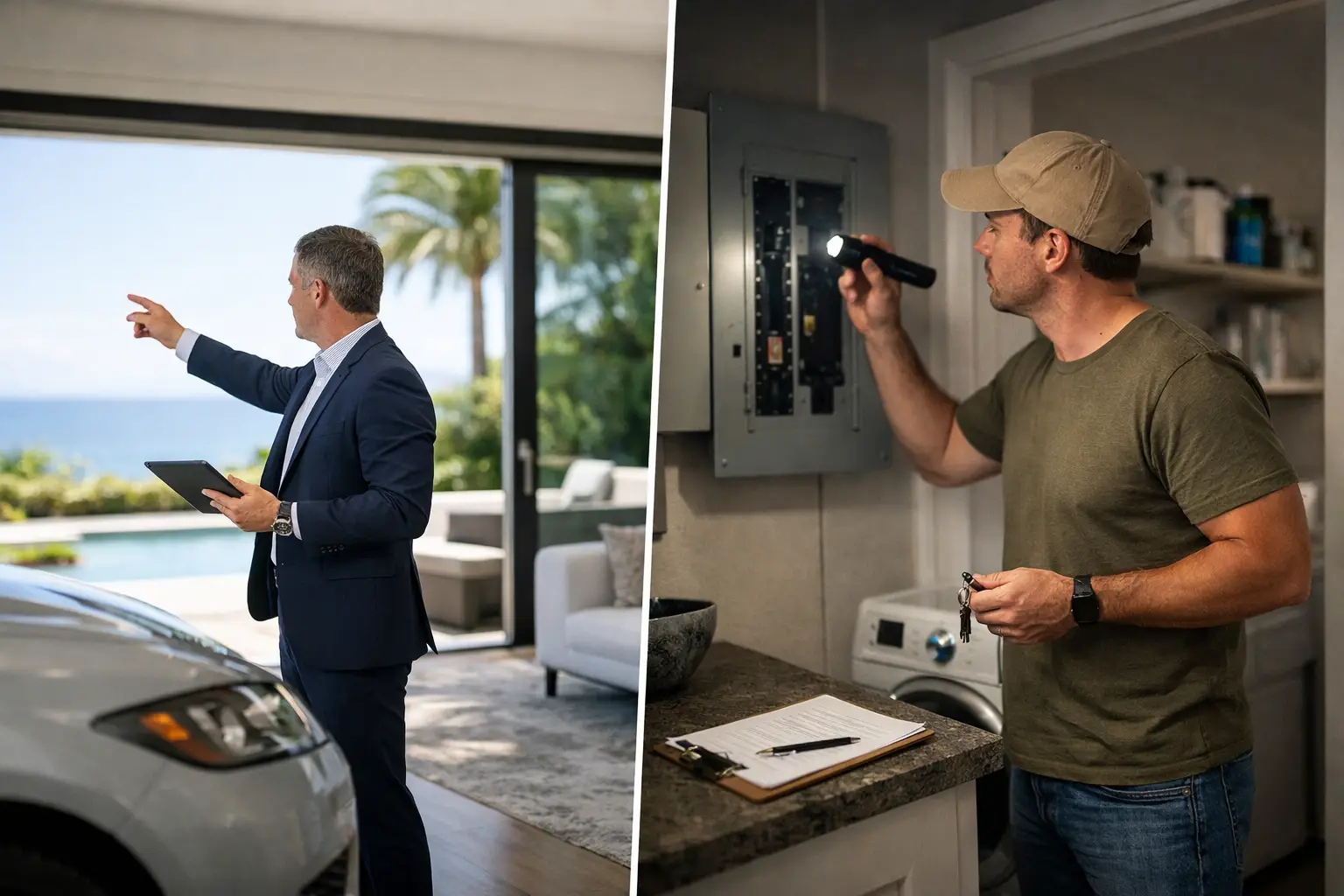
A luxury residence can look perfectly secure from the street while a small concern develops quietly inside: a temperature change near the wine room, an irrigation leak along a landscaped wall, or a service alert that needs a trusted local response. The distinction between concierge oversight vs standard home watch is not simply how often someone visits. It is the level of accountability, documentation, judgment, and personal coordination surrounding the home while you are away.
For a seasonal property in Scottsdale, Paradise Valley, or Fountain Hills, that distinction can shape how confidently you leave, how quickly concerns are identified, and whether your home is truly ready when you return.
Concierge Oversight vs Standard Home Watch: The Real Difference
Standard home watch is a valuable service for many properties. At its core, it generally involves periodic visual checks of an unoccupied residence. A home watch professional may walk through the interior, survey the exterior, look for visible signs of water intrusion or damage, collect mail when arranged, and notify the owner if something appears out of place.
That level of service may be entirely appropriate for a smaller home, a short absence, or an owner who already has local family, vendors, and a property manager available to handle details. The service is designed to provide a reassuring set of eyes on the property and identify obvious concerns.
Concierge oversight is built for a different expectation. It combines structured property inspections with proactive coordination and a higher-touch approach to the homeownership experience. The goal is not merely to confirm that someone entered the home. It is to maintain a clear, documented understanding of the property’s condition and manage the next step when an issue requires attention.
For owners of high-value residences, the distinction often comes down to this: standard home watch reports what was observed. Concierge oversight is designed to observe, document, communicate, coordinate, and help protect the standards of the home.
Structured Inspections Create Real Accountability
The quality of an oversight service is most visible in its process. A casual walkthrough can identify a major issue, but it can also leave significant room for inconsistency. What was checked? What did the area look like last week? Was the thermostat reading reviewed, or was the room simply glanced at? Were exterior gates, water features, pool equipment, or irrigation controls considered?
A concierge-level provider works from a structured inspection routine tailored to the residence. Interior and exterior checkpoints are completed methodically, which helps ensure that the same critical areas receive attention on every scheduled visit. This is especially valuable in large homes and upscale condos, where systems, finishes, furnishings, and outdoor features can require closer observation.
Detailed, time-stamped photo reporting adds another layer of confidence. Rather than receiving a brief message that the home is “fine,” an owner has a professional record of the visit and the property’s observed condition. This documentation supports transparency and gives the homeowner a practical reference point if a concern arises later.
At I Watch 4 You, HomeWatchIT® reporting supports this disciplined approach, giving absentee homeowners a clear view of what has been checked without requiring them to manage the process from another state or country.
The Difference Is Most Clear When Something Needs Attention
No home watch service can prevent every problem. A sudden plumbing failure, a monsoon-related exterior issue, a power interruption, or an HVAC concern can occur even in a carefully maintained residence. What matters is how promptly the concern is noticed and what happens next.
With a basic home watch arrangement, the provider may alert the owner and wait for instructions. That can work well if the owner has an established network of local professionals and is available to direct the response. But when owners are traveling, working, or several time zones away, every additional call can slow the resolution process.
Concierge oversight is more prepared for the operational side of ownership. Within agreed-upon authorization limits, the provider can coordinate qualified vendors, provide access, document the work in progress, and keep the owner informed. The homeowner remains in control of decisions, but does not need to become the on-site coordinator from afar.
This is particularly meaningful when an issue affects several moving parts. A leak may require a plumber, water mitigation specialist, and follow-up cleaning. A gate malfunction may require security attention before a repair appointment can be scheduled. A concierge-minded property professional helps bring order to those moments with discretion, urgency, and clear communication.
White-Glove Service Extends Beyond the Inspection
The word “concierge” should mean more than an upgraded label. In property oversight, it reflects a willingness to manage the details that make an absence and return easier for the homeowner.
Return preparation is a practical example. After months away, most owners do not want their first day back to involve checking appliances, arranging a cleaner, waiting for a service professional, or discovering that the pool needs attention. Concierge support can help prepare the residence ahead of arrival, based on the homeowner’s preferences and approved services.
This may include coordinating housekeeping, confirming that essential systems are functioning, arranging vendor appointments, preparing for deliveries, or ensuring the property presents as expected. The precise scope should always be defined in advance, because each homeowner’s preferences, home systems, and level of desired involvement differ.
For a luxury residence, these details are not incidental. They protect the comfort, privacy, and standard of living that led the owner to choose the home in the first place.
When Standard Home Watch May Be Enough
Concierge oversight is not automatically necessary for every vacant property. A straightforward residence with limited systems, frequent owner visits, and dependable local support may only need consistent, professional home watch inspections. The right service level depends on the property, the owner’s availability, and the consequences of a delayed response.
Standard home watch can be a sensible choice when the home is unoccupied for shorter periods, the owner has trusted neighbors nearby, and vendor coordination is not a concern. It can also fit homeowners who prefer to receive alerts and personally approve every action before anyone proceeds.
However, a larger estate, seasonal home, or high-end condominium often carries more complexity. There may be smart-home systems, climate-sensitive areas, extensive landscaping, pools and spas, specialty finishes, frequent deliveries, association requirements, or a greater need for controlled vendor access. In these circumstances, a basic visual check may not provide the depth of care the property warrants.
Questions to Ask Before Choosing a Service
The most useful comparison is not based on a service name alone. Ask how inspections are performed, how findings are documented, and how quickly concerns are communicated. Clarify whether the provider coordinates vendors, whether photo reports are included, and what authority they have in an urgent situation.
It is also wise to ask whether the service is customized to your home’s actual features. A luxury property should not be treated as a generic checklist. Its oversight plan should reflect its systems, exterior environment, occupancy patterns, and your personal expectations for privacy and presentation.
Finally, consider the return experience. If you expect to arrive at a residence that is clean, orderly, functional, and prepared for your stay, choose a provider whose service model extends beyond inspection day.
The right level of oversight should let you enjoy time away without mentally managing the home from a distance. When a residence represents a meaningful investment and a personal retreat, professional care should feel measured, documented, and quietly dependable long before you turn the key at the front door.

