
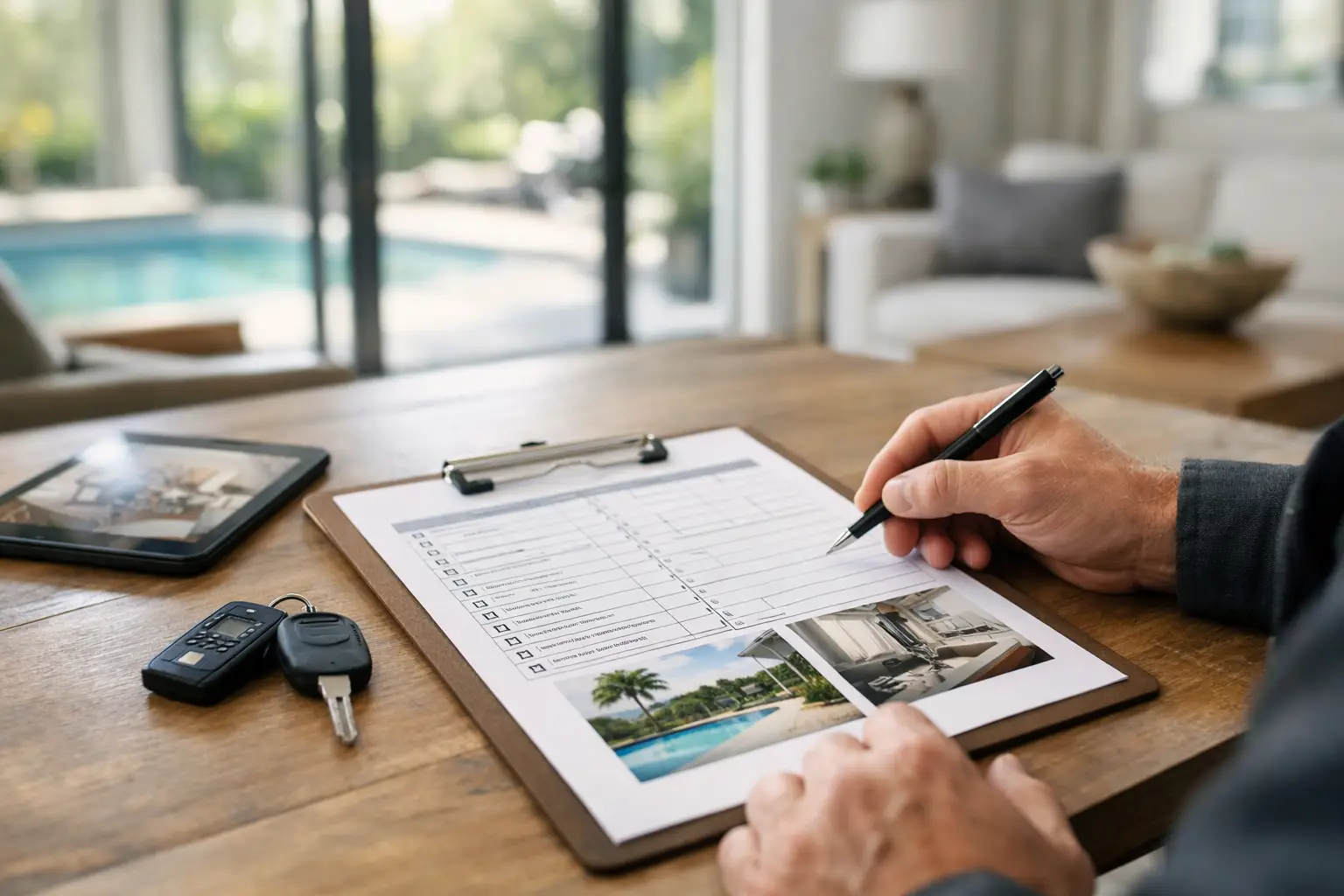
A luxury residence can appear perfectly still from a distance while a small concern develops behind a closed door: a slow drip beneath a sink, an HVAC alert, a pool equipment fault, or windblown debris at a side gate. An example of a home watch report should show more than that someone visited. It should give an absentee homeowner clear, documented evidence of what was inspected, what was found, what action was taken, and whether anything requires a decision.
For a second home in Scottsdale, Paradise Valley, or Fountain Hills, that level of accountability is not a convenience. It is the standard that allows an owner to be away with confidence. A polished report turns professional property oversight into something visible, traceable, and useful.
What a Home Watch Report Is Designed to Prove
A proper home watch report is a record of a structured inspection, not a casual update saying that the property is “fine.” The distinction matters. A meaningful report identifies the date and time of the visit, the inspector, the areas reviewed, observations made, supporting photographs, and any follow-up steps.
For luxury homeowners, documentation serves two purposes. First, it creates clarity. You should not have to wonder whether the water was checked, whether the air conditioning was operating, or whether an exterior access point was secure. Second, it creates accountability. If a concern is identified, the report establishes when it was discovered and how it was addressed.
The best reports are specific without being needlessly alarmist. A single leaf pile near a patio drain may require monitoring after a storm, while a visible leak, abnormal temperature reading, or active system alert should prompt immediate escalation. Professional judgment is evident in both the detail of the inspection and the response that follows.
Example of a Home Watch Report
The sample below reflects the level of information a discerning owner should expect from a white-glove home watch visit. It is illustrative rather than a fixed checklist, since each residence has its own systems, features, and owner preferences.
Property Visit Details
Property: Private seasonal residence, North Scottsdale, Arizona Visit date: January 16, 2026 Arrival time: 10:05 a.m. Departure time: 11:02 a.m. Inspector: Assigned Home Watch Professional Weather conditions: Clear, 63°F, light wind Overall status: Attention required – minor exterior drain obstruction identified and resolved
The opening section establishes a clear chain of custody for the visit. Arrival and departure times are not filler. They demonstrate that the home received a purposeful inspection rather than a rushed pass-through.
Exterior and Security Review
The inspector approached the property and observed no signs of forced entry, vandalism, standing water, package accumulation, or unusual activity. Driveway, front entry, side gates, perimeter walls, pool access gates, and visible windows were reviewed. All accessible doors and gates were secured at the end of the visit.
Landscape areas were visually assessed for irrigation overspray, fallen branches, storm debris, and water pooling. A light accumulation of leaves was found at the rear patio drain following recent wind. The debris was cleared during the visit, and a time-stamped photo was added before and after removal. No water intrusion or exterior damage was observed.
Pool and spa equipment appeared operational. The water level was within the owner’s preferred range, and no visible equipment leaks were present. The pool service company’s most recent service tag was visible and current.
This portion of the report does not merely say “exterior checked.” It identifies the areas inspected, records the condition found, and documents the action taken. Where a concern is minor and resolved on site, the owner can see that it was handled without unnecessary interruption.
Interior Systems and Living Areas
Upon entry, the inspector confirmed that the security system showed its expected status and that the interior was free of unusual odors, smoke indications, pest activity, visible water intrusion, or signs of unauthorized entry. Interior temperature registered at 76°F, consistent with the owner’s vacant-home setting. The HVAC system was operating normally at the time of inspection.
The kitchen, laundry room, primary bath, guest baths, utility room, and other designated plumbing areas were inspected for visible leaks, moisture, cabinet-floor damage, and unusual sounds. Toilets and faucets were checked according to the home’s service plan. No concerns were observed.
Electrical panels and monitored equipment indicators were reviewed visually. The refrigerator was operational, interior lighting was functioning as expected, and no error messages appeared on the home’s designated smart-home controls. The inspector also confirmed that blinds, shades, and selected lights remained in the owner’s preferred vacant-property configuration.
For a residence with a wine room, elevator, generator, water-treatment system, or sophisticated automation, the report should reflect those assets specifically. A generic checklist can be useful, but it should never replace a property-specific inspection plan.
Photos and Supporting Documentation
A high-quality report includes time-stamped photographs that support the written observations. Images may show the secured front entry, pool equipment, thermostat display, interior living areas, utility spaces, and any issue that was identified or corrected.
Photos are especially valuable when conditions change between visits. If a monsoon storm causes debris accumulation, if a vendor repairs an irrigation line, or if an owner requests a closer look at a particular area, visual documentation provides a reliable reference point. It also reduces the need for vague back-and-forth messages while the owner is traveling or residing out of state.
At I Watch 4 You, structured reporting through HomeWatchIT® supports this level of precision, helping homeowners receive a consistent record of each completed visit.
How a Strong Report Handles an Exception
The true value of a report is often revealed when something is not quite right. Consider a different finding: the inspector discovers moisture beneath a laundry-room sink and a small but active drip at a supply valve. A useful report would describe the condition plainly, attach photographs, note the immediate mitigation taken if authorized, and explain the recommended next step.
For example, the report might state that the water supply was shut off to the affected fixture, the surrounding area was dried, and a licensed plumber was contacted for the earliest available appointment. The homeowner would then receive a concise notification containing the condition, the action already taken, the expected vendor timing, and any authorization needed.
That process balances responsiveness with discretion. Not every observation warrants an urgent call. A trusted home watch provider understands an owner’s preferences, spending limits, approved vendors, and communication protocol. Yet a suspected leak, security concern, HVAC failure during extreme temperatures, or significant storm damage should never wait for the next routine report.
What Should Not Be Missing From the Report
A report can look polished and still fail to deliver practical value. Be cautious if it lacks time-stamped details, property-specific observations, photographs, or a documented resolution path for concerns. Phrases such as “all okay” or “house checked” provide little reassurance when they are not supported by inspection details.
Likewise, reports should distinguish between observation and diagnosis. A home watch professional can document that an HVAC display shows an error code or that water is present near an appliance. Determining the mechanical cause may require a qualified specialist. That is not a weakness in the report. It is responsible property oversight, followed by appropriate vendor coordination when needed.
The right depth also depends on the residence. A lock-and-leave condominium may require a focused review of interior systems, balconies, entry points, and building-related notifications. A larger estate may call for a broader examination of gates, landscaping, detached structures, pools, guest quarters, and multiple mechanical systems. The report should match the exposure and complexity of the home.
Reading the Report as an Owner
When your report arrives, you should be able to understand the property’s status in a few minutes. Begin with the overall status and any items marked for attention. Then review the supporting photos and recommended actions. If no exceptions are noted, the detail still matters because it confirms that the critical areas were inspected rather than assumed to be in order.
Over time, consistent reports become a valuable property history. They can reveal recurring irrigation concerns, document vendor work, show when seasonal settings were changed, and provide useful context before your return. This continuity is particularly valuable for homes that sit unoccupied through summer heat, monsoon weather, or extended travel periods.
A home watch report should leave you with a simple, well-earned feeling: your residence has been seen, inspected, documented, and cared for with the same attention you would give it yourself.


2 Comments