
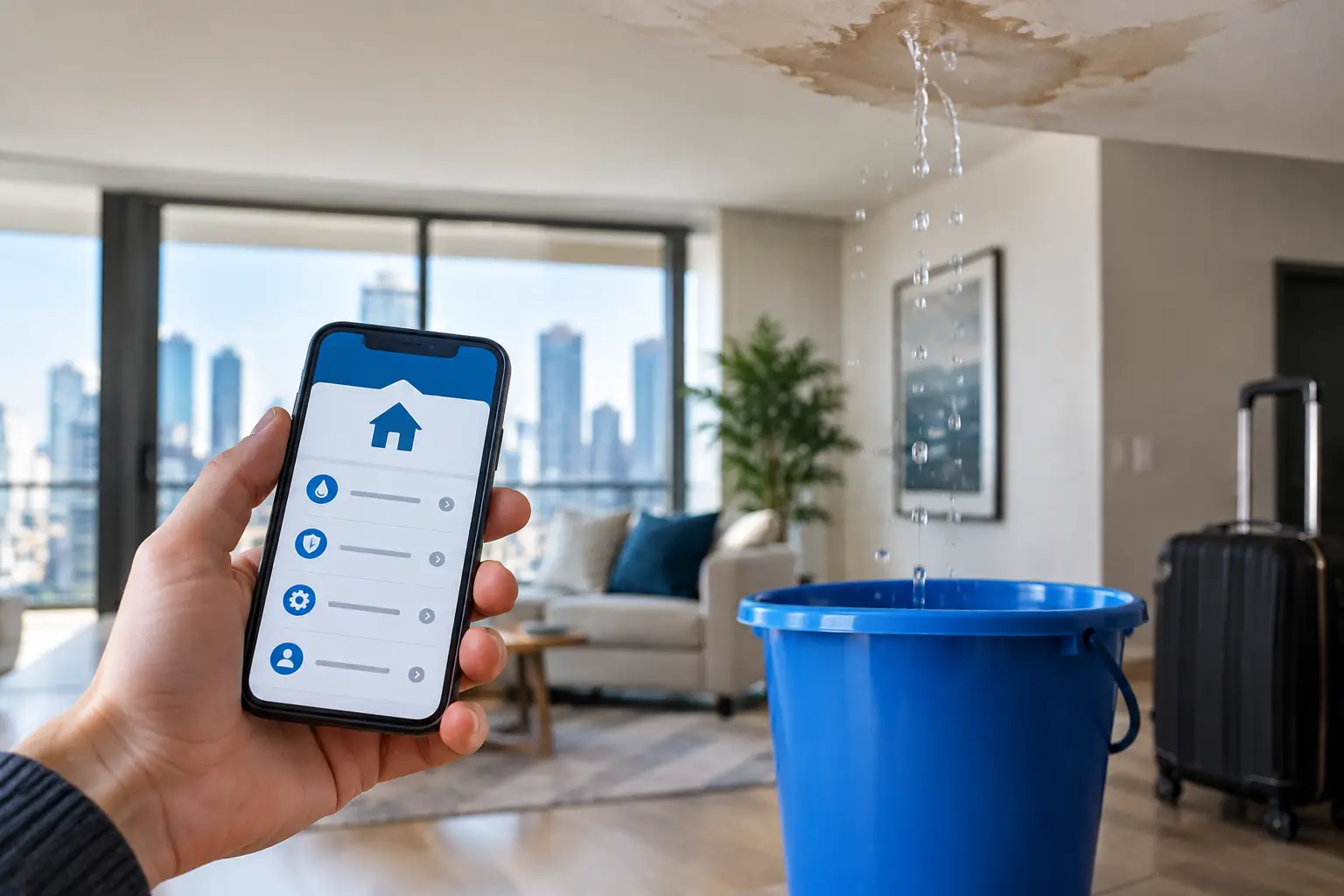
A water alert from an unattended condo is rarely a minor inconvenience. A failed supply line, overflowing HVAC condensate drain, or slow leak beneath a vanity can affect finished flooring, cabinetry, personal belongings, and residences below before anyone notices. A thoughtful condo leak response is therefore about more than stopping water. It is about protecting a valuable residence, honoring building protocols, and making sound decisions quickly when you are hundreds or thousands of miles away.
For seasonal and absentee owners, the most reassuring response is calm, documented, and coordinated. The right local oversight turns an unsettling call into a controlled sequence of actions.
Why Condo Leaks Require a Different Response
A leak in a single-family home is contained within one property, at least initially. In a condominium, water often travels through shared walls, ceilings, chases, and mechanical systems. The visible damage may be in one unit while the origin is in another. A wet ceiling may point to an upstairs plumbing issue, a compromised roof assembly, a common-area line, or a neighboring HVAC drain.
That uncertainty makes immediate communication essential. The building manager or HOA may need to access common areas, notify adjacent owners, dispatch an approved plumber, or involve the association’s insurance carrier. Meanwhile, your own insurer may require prompt notice and clear evidence of the condition inside your residence.
Responsibility also depends on the governing documents and the source of the water. An owner may be responsible for an appliance connection or fixture inside the unit, while the association may be responsible for a shared riser, roof, or common plumbing component. It is wise not to assume fault in the first hours. Focus first on preventing additional damage, preserving documentation, and allowing qualified professionals to identify the source.
The First Hour of a Condo Leak Response
The first priority is safety. If water is near electrical outlets, panels, appliances, or ceilings that appear swollen or unstable, no one should enter the affected area casually. A licensed professional or building emergency team should determine whether power needs to be shut off and whether the area is safe to access.
Once it is safe, the response should follow a disciplined order:
- Verify the condition. A trusted person on site should identify where water is visible, whether it is actively flowing, and which rooms or surfaces are affected. Clear, time-stamped photographs and video establish an accurate starting point.
- Stop or reduce the source. This may mean turning off a fixture-level valve, shutting off the unit’s water supply, or asking building management to isolate a shared line. Water should not be shut off blindly if doing so could affect other units or a building system.
- Notify the right parties. Contact the building’s emergency line or manager, then alert the appropriate restoration and plumbing professionals. If a neighboring unit may be involved, management should coordinate access and communication.
- Begin professional drying promptly. Water removal and moisture measurement should begin as soon as the source is controlled. Waiting for a perfect determination of responsibility can allow moisture to migrate into drywall, flooring, insulation, and cabinetry.
- Create a written record. Note who was contacted, when they arrived, what they observed, and the actions taken. Keep invoices, photos, reports, and communications in one organized file.
For an owner away from Arizona, the difference between a contained event and a costly claim often comes down to how quickly someone can be present, authorized, and prepared to coordinate access.
Do Not Treat Dry Surfaces as Proof of Dry Materials
A floor can appear dry while moisture remains beneath engineered wood, behind baseboards, or inside a wall cavity. This is where professional moisture readings matter. A proper mitigation team documents affected materials, takes measurements over time, and determines whether controlled drying, selective removal, or further investigation is warranted.
There is a practical balance to strike. Owners should not authorize unnecessary demolition before the scope is understood, but they also should not delay legitimate mitigation to avoid an uncomfortable decision. The immediate goal is to stabilize the environment and prevent secondary damage such as warping, mold growth, or deterioration of finishes.
Who Should Be Involved, and When
Your property manager or home watch professional should be the point person on site, but that role works best with clear authority established in advance. Building management needs to know who may enter your residence, who may receive updates, and who may authorize emergency mitigation up to an agreed-upon limit.
A plumber addresses the source when it is within the unit or accessible through approved building systems. A water mitigation company assesses and dries the affected materials. The HOA or condominium manager coordinates matters involving common elements, building access, and neighboring residences. Your insurance agent or carrier should be notified early enough to preserve coverage requirements, although the insurer may not direct the emergency work itself.
For higher-value residences, discretion matters as much as speed. Vendor access should be supervised when possible, keys and codes should be controlled, and the home should be secured after each visit. A response that solves the water issue but leaves a luxury condo exposed or disorganized is not a complete response.
Prepare Before a Leak Has a Chance to Escalate
A written emergency plan removes hesitation at the moment it matters most. Keep the unit water shutoff location documented, along with the building’s after-hours contact number, HOA manager, insurance details, preferred plumber, restoration company, and a trusted local representative. If your condominium has special rules for contractors, elevator reservations, parking, or certificates of insurance, include those requirements as well.
Owners should also decide in advance who can approve work. A reasonable emergency spending threshold allows immediate stabilization without repeated delays caused by travel, time zones, or missed calls. The threshold should be high enough to enable water extraction and drying, but structured enough that substantial repairs still receive owner approval.
When a residence will be vacant for weeks or months, prevention deserves the same level of attention as response. Periodic inspections can identify a dripping supply valve, moisture beneath a sink, a malfunctioning water heater pan, or an HVAC condensate concern before it becomes an active loss. Water sensors can provide an additional alert, but they are most valuable when there is a trusted person nearby who can respond.
In Scottsdale, Paradise Valley, and Fountain Hills, seasonal absences often coincide with intense summer heat and monsoon conditions. HVAC equipment works hard, and an unattended residence can conceal a small issue longer than an occupied home would. Structured inspections should include visible plumbing connections, water heater areas, under-sink cabinets, ceilings, mechanical spaces, and signs of moisture around exterior openings.
Documentation Protects More Than an Insurance Claim
Detailed reporting gives an absentee owner the ability to make informed choices without being physically present. Before-and-after photographs, moisture readings, technician findings, vendor recommendations, and time-stamped updates create accountability at every stage.
Documentation is equally useful when the origin involves another unit or a common element. It helps distinguish observation from assumption and gives all parties a consistent record of what was found. That can reduce confusion between owners, managers, contractors, and insurers during an already stressful event.
A white-glove property oversight service should also provide a concise explanation of the situation, not simply forward a stream of vendor messages. Owners deserve to know what happened, what has been completed, what remains pending, and where a decision is needed. I Watch 4 You uses structured inspections and documented reporting to provide that level of clarity when a property concern requires immediate attention.
Returning to a Condo After Water Damage
Before returning, ask for confirmation that drying is complete, affected areas are secure, and any temporary equipment has been removed. If repairs remain in progress, the home should still be clean, accessible, and ready for your arrival, with a clear schedule for the remaining work.
A final walkthrough should verify that shutoff valves have been restored as appropriate, appliances are operating, access credentials are secure, and no new damage is visible. For a luxury residence, details such as flooring transitions, cabinetry alignment, paint matching, and HVAC performance deserve attention alongside the larger repair scope.
A leak can be disruptive, but it does not have to become a prolonged burden for an owner who is away. With immediate on-site verification, disciplined vendor coordination, and careful documentation, the response can protect both the residence and the peace of mind that comes with leaving it in capable hands.

