
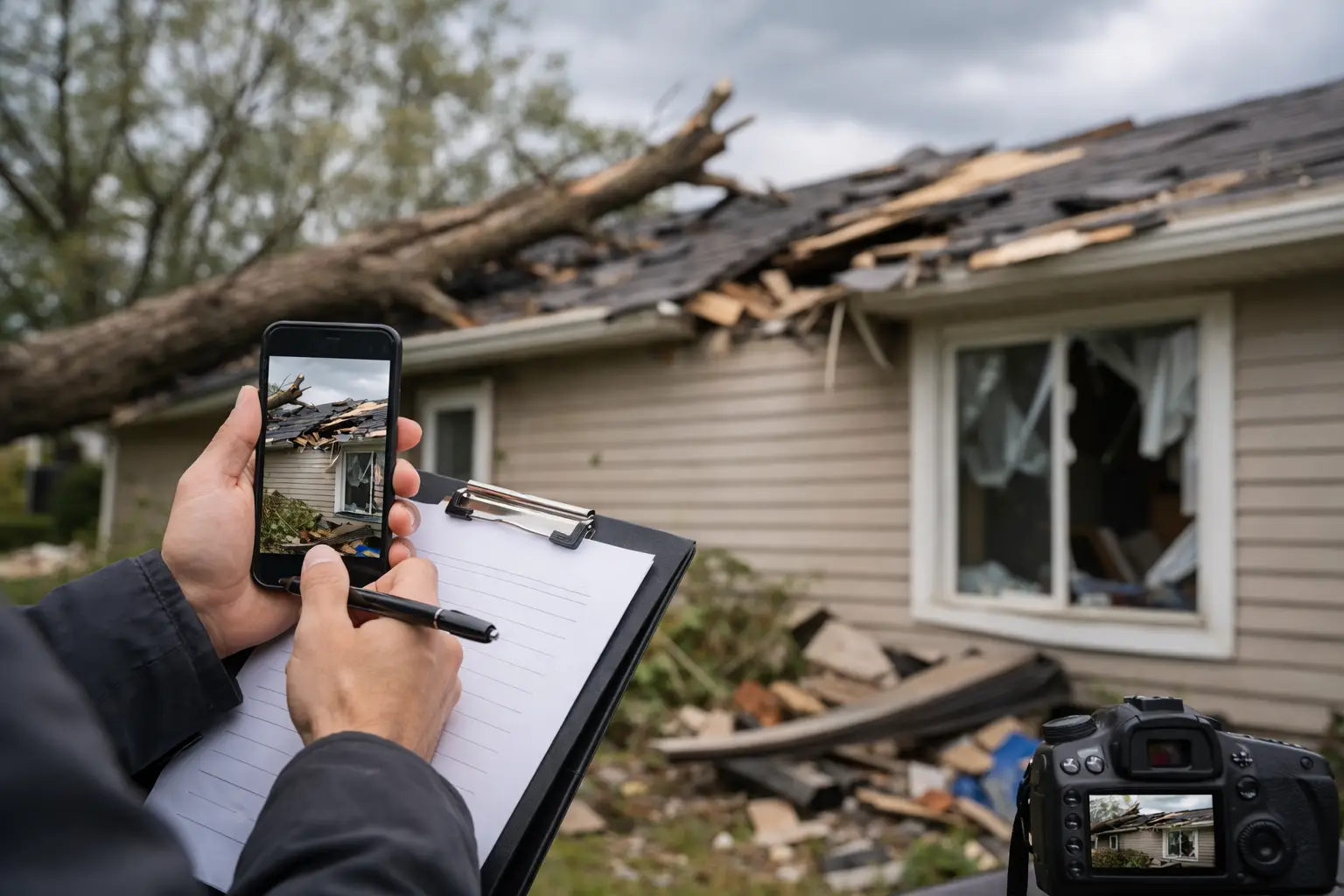
A storm can leave behind more than visible debris. A lifted roof tile, water stain beneath a window, damaged landscape wall, or failed pool system may be the first sign of a larger issue developing out of sight. Knowing how to document storm damage promptly gives you a clear record of the property’s condition, supports informed insurance conversations, and helps prevent a minor concern from becoming a costly repair.
For seasonal and absentee homeowners, the challenge is often timing. By the time you return to your Scottsdale, Paradise Valley, or Fountain Hills residence, landscaping may be restored, water may have dried, and the clearest evidence of what occurred may be gone. A structured, time-stamped approach protects the record – and the home.
Start With Safety and Stabilization
Do not begin documenting damage by entering an unsafe area. Downed power lines, unstable trees, broken glass, standing water near electrical equipment, and compromised roofing all require appropriate professional attention. If there is an active leak, shut off the water only if it is safe to do so, then contact a qualified plumber or restoration provider.
Once the immediate hazard is addressed, avoid making permanent repairs before the condition has been thoroughly recorded. Temporary measures, such as covering an opening to prevent further water intrusion, are often necessary. Photograph the affected area before and after protective work is performed, and retain receipts for emergency services and materials.
The goal is not to leave a luxury home exposed for the sake of documentation. It is to preserve evidence while making prudent decisions that limit additional loss.
How to Document Storm Damage Before Cleanup Begins
Begin with wide photographs that establish the overall scene. Capture the front, rear, and sides of the home, along with driveways, gates, patios, pool areas, landscape features, and outbuildings. These images provide context for closer photographs and help show where debris, runoff, or impact occurred.
Then move methodically through the property. A consistent exterior-to-interior sequence is useful because it reduces the chance that a smaller issue is overlooked. For example, document the roofline and gutters first, then windows and doors, followed by exterior finishes, mechanical equipment, and interior rooms.
Take more photographs than you believe you will need. A single image may show that a screen is torn, but a series of images can establish its location, the surrounding condition, and the source of the damage. Use both horizontal and vertical framing where helpful. Include close-ups of cracked tile, dents, stains, or displaced materials, as well as wider shots that show scale.
Video can add useful context, particularly after severe wind, hail, or monsoon-related runoff. A slow, narrated walkthrough can capture the sound of dripping water, the movement of a damaged gate, or the relationship between a blocked drain and a flooded patio. Keep narration factual: state the date, time, location, and what is visible. Avoid guessing about the cause until a qualified professional has assessed it.
Create a Clear Written Record
Photos are strongest when paired with concise notes. For each issue, record where it was found, when it was first observed, and what appears to be affected. If the property was vacant, note the date of the last documented inspection and the date the damage was discovered.
A useful entry might read: “North guest bedroom, ceiling near exterior window: brown water staining approximately 18 inches wide observed at 9:15 a.m. on August 12. No active dripping at time of inspection. Window sill dry. Exterior area shows storm debris and water pooling near drainage channel.”
That level of detail is more valuable than simply writing “water damage in bedroom.” It gives an insurer, roofer, restoration provider, or property manager a starting point without overstating what is known.
Your storm-damage file should include these distinct records:
- Time-stamped photos and videos, retained in their original form when possible
- A written log of observations, including room or exterior location
- Weather dates and approximate times, if known
- Invoices, receipts, estimates, and emergency mitigation records
- Written communications with vendors, insurers, and property oversight professionals
If you notice a change over several days, photograph it again. Expanding water stains, new cracking, or declining pool-water levels can help establish that the condition is evolving and needs faster attention.
Preserve the Details That Are Easy to Lose
Cleanup is often where valuable evidence disappears. Fallen branches are removed, patio surfaces are power washed, and a vendor may replace a broken component before anyone has recorded its condition. Before removal, photograph debris where it landed and note any damage it caused.
For damaged personal property, photograph the item in place before moving it. Capture identifying details such as model numbers, serial numbers, labels, and distinguishing finishes. This matters in a well-appointed residence, where custom furnishings, art, window treatments, specialty appliances, and outdoor features may not be adequately represented by a generic description.
Avoid discarding damaged materials until you have received guidance from your insurer or claim representative, unless they present a health or safety issue. If removal is necessary, retain samples or detailed photographs when practical. It depends on the type and extent of loss, but preserving the record is usually the more cautious course.
Bring in Qualified Professionals Early
Not every storm-related issue is obvious. Wind-driven rain can enter around flashing or window assemblies without leaving an immediate interior stain. Hail can affect roofing materials in ways that are difficult to identify from the ground. A pool pump, gate operator, landscape irrigation controller, or exterior lighting system may fail after water exposure or a power event.
A qualified professional can assess the condition within their area of expertise and provide written findings. Request photos, dates of service, a description of observed conditions, and a clear distinction between emergency mitigation, recommended repair, and optional improvement. This documentation creates accountability and makes it easier to compare proposals without losing sight of the original issue.
For absentee owners, professional property oversight adds another layer of protection. A structured inspection performed soon after a storm can identify concerns before they worsen, create an independent photo record, and coordinate properly credentialed vendors while the homeowner remains away. The value is not simply having someone visit the home. It is having a documented process, timely escalation, and disciplined follow-through.
Keep Insurance Communication Factual and Organized
Notify your insurer according to your policy requirements, especially when there is active water intrusion, structural concern, or significant damage. Provide the facts you have documented, but do not feel pressured to diagnose the issue yourself. “Water staining observed after storm activity” is more precise than declaring a roof failure before an inspection has occurred.
Keep a simple communication log with the date, person contacted, claim number, and next step. Save copies of emails, estimates, inspection reports, and receipts in one secure location. If an adjuster visits the property, have your photo log and written observations available so the inspection can begin with a clear timeline.
Coverage, deductibles, exclusions, and claim requirements vary by policy. A documented condition does not guarantee coverage, but it gives you and your advisors a far more reliable basis for evaluating the situation.
A Higher Standard for Homes Left Unattended
Luxury properties often have multiple systems and finishes that deserve close attention after a storm: flat roof sections, custom skylights, outdoor kitchens, motorized shades, water features, delicate desert landscaping, and sophisticated security or automation equipment. A quick visual check may miss damage that affects comfort, security, or long-term value.
This is why precision matters. At I Watch 4 You, structured property inspections and time-stamped photo reporting are designed to give absent homeowners a clear view of what is happening at their residence, including after changing weather conditions. Prompt documentation supports better decisions, whether the next step is monitoring, mitigation, or vendor coordination.
After a storm, the most reassuring record is one created before memories fade and conditions change: clear images, measured observations, and a trusted local professional who knows what deserves attention.

