
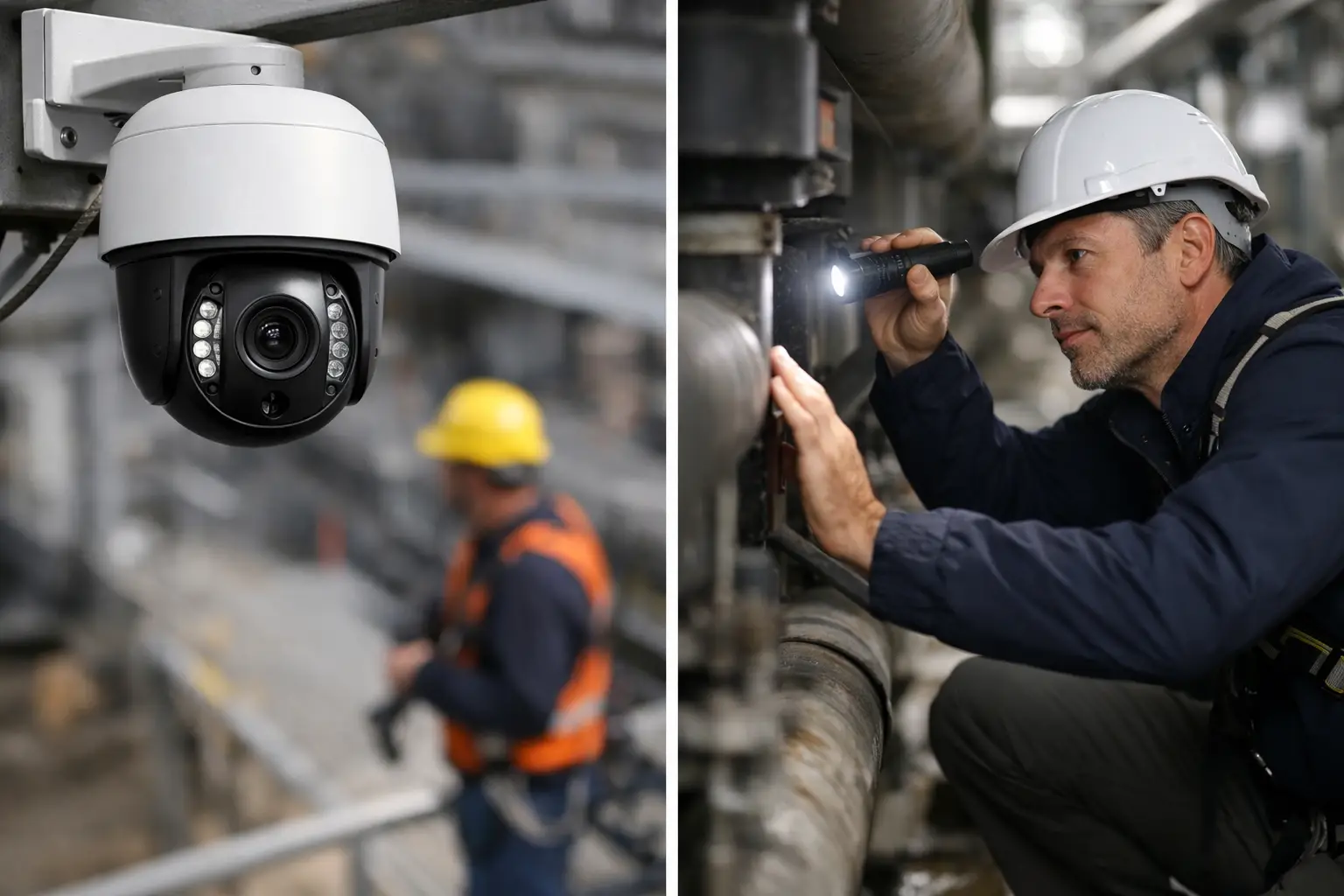
A camera alert can tell you that movement occurred near the side gate. It cannot tell you whether the gate latch is loose, a pool equipment line is dripping, an air conditioner is straining in extreme heat, or a small stain beneath a sink is the first sign of a costly leak. For absentee homeowners, remote cameras versus physical inspections is not simply a question of convenience. It is a question of how confidently a valuable residence is being protected while no one is home.
Cameras are useful security tools. A structured, in-person home watch inspection serves a different purpose: verifying the condition of the property, identifying developing concerns, and creating a documented record of what was observed and addressed.
What Remote Cameras Do Well
Remote cameras provide a valuable layer of visibility. They can show arrivals at a front entrance, activity in a driveway, deliveries, and unexpected movement around exterior access points. For homeowners traveling between residences, receiving a prompt alert can offer welcome reassurance that the property is quiet and secure.
Modern systems also make it easier to review an event after the fact. If a landscaper arrives outside a scheduled window or a package is left at the door, a homeowner has a visual reference without needing to call a neighbor. Exterior cameras can be particularly helpful at homes with multiple entry points, guest houses, detached garages, or perimeter gates.
That visibility has limits. A camera observes only what is within its field of view, under the conditions in which it is operating. Glare, darkness, dust, an obstructed lens, a weak connection, a drained battery, or a system outage can leave an owner with incomplete information. Even a clear video feed does not interpret what it sees with the judgment of an experienced local professional.
Privacy also deserves consideration. Interior cameras may be appropriate in selected areas, but many luxury homeowners prefer to limit constant recording inside a private residence. They may also need to accommodate guests, housekeepers, pet sitters, or approved vendors without turning the home into a surveillance environment.
Remote Cameras Versus Physical Inspections: The Essential Difference
The central difference is simple: cameras detect visible activity, while physical inspections evaluate property condition. A professional home watch visit is not a casual walkthrough. It is a deliberate process of looking, listening, testing, and documenting according to a consistent inspection standard.
A trained home watch professional can open a cabinet and check for moisture. They can listen for an unusual mechanical sound, detect an odor that suggests a plumbing or HVAC issue, observe whether a refrigeration unit is operating properly, and see whether a door, window, or shade is behaving as expected. They can inspect pool equipment, irrigation conditions, exterior surfaces, and signs of storm-related damage that may not trigger a camera alert.
In Scottsdale, Paradise Valley, and Fountain Hills, seasonal conditions can turn a minor issue into an expensive one quickly. Intense summer temperatures place heavy demands on cooling systems. Monsoon winds can move debris, affect drainage, or expose weaknesses around exterior features. A failed irrigation line can waste water and damage landscaping before it is obvious from a fixed camera angle.
Physical inspections also provide context. A person on site can distinguish between ordinary condensation and active water intrusion, a scheduled vendor visit and an unfamiliar presence, or a harmless equipment cycle and a sound that requires immediate service. That judgment is where professional property oversight earns its value.
Documentation Creates Accountability
For a seasonal or second-home owner, reassurance should be more substantial than a message saying that everything looks fine. A premium home watch service should provide clear, time-stamped reporting that confirms what was inspected and records any exception found during the visit.
Detailed photo documentation gives an owner a reliable point of reference from one inspection to the next. If a crack, stain, landscape concern, or equipment condition changes over time, the progression can be seen and addressed earlier. It also helps establish accountability when coordinating with vendors, insurers, or property managers.
At I Watch 4 You, structured inspections supported by HomeWatchIT® are designed to provide this level of clarity. The purpose is not to overwhelm homeowners with routine images. It is to give them an organized, credible record of their home’s condition and a prompt path forward when attention is required.
Cameras can supplement that record, but they do not replace it. A video clip may show rain falling near a patio door. A physical inspection can determine whether water entered, where it traveled, and whether a mitigation professional should be contacted.
Where Cameras Can Leave Gaps
A fixed camera rarely sees the places where early warning signs appear. Most homes have numerous areas that need periodic attention: under sinks, behind toilets, at water heaters, inside laundry rooms, around appliances, within mechanical closets, and near windows or doors. A camera cannot check whether a circuit breaker has tripped, whether an appliance has leaked, or whether a smoke detector is signaling a low battery.
It also cannot provide a useful response when something is wrong. An owner hundreds or thousands of miles away may receive an alert, but still need someone trusted to visit the home, assess the situation, meet a vendor, and confirm that the work was completed appropriately. Delays are often where a small concern becomes a larger repair.
This is especially relevant for homes that sit vacant for weeks or months. The longer a property is unoccupied, the more valuable routine human observation becomes. Small changes that a resident would notice immediately can otherwise remain unnoticed until they become disruptive, visible, or costly.
A Better Standard Is Both, Not Either
For many homeowners, the strongest approach is not choosing one method exclusively. Remote cameras can provide everyday security awareness, while scheduled physical inspections deliver the comprehensive oversight cameras cannot provide.
The right balance depends on the residence and the owner’s needs. A condominium with controlled building access may benefit from a different inspection focus than a large estate with a pool, detached structures, extensive landscaping, and multiple mechanical systems. A homeowner who is away for two weeks has different needs than one who returns to Arizona only seasonally.
The most effective plan is tailored, consistent, and responsive. It establishes who is checking the home, what is being checked, how findings are communicated, and what happens if a concern is discovered. It also accounts for practical details that are easy to overlook from afar, such as vendor access, package removal, return preparation, and confirmation that the home is ready before the owner arrives.
What Professional Oversight Looks Like When an Issue Appears
The quality of a home watch service is most apparent when the inspection is not routine. If a concern is identified, the next steps should be calm, efficient, and well documented. The homeowner should receive a clear explanation of the finding, supporting photos where appropriate, and a recommended course of action.
With authorization, a local home watch professional can coordinate qualified vendors, provide access, monitor the visit, and report back on the outcome. This is distinctly different from receiving an alert and trying to manage an unfamiliar problem remotely. It preserves the homeowner’s control while removing the burden of coordinating every detail from another state or country.
For luxury homes, discretion matters just as much as response time. Professional oversight should respect the privacy of the residence, limit unnecessary disruption, and communicate with the precision expected of a white-glove service.
A camera can help you see an event. A careful person on site can help you understand its significance, act on it appropriately, and protect the condition of the home you have worked hard to enjoy. When you are away, that distinction is worth planning for well before the next alert arrives.

