
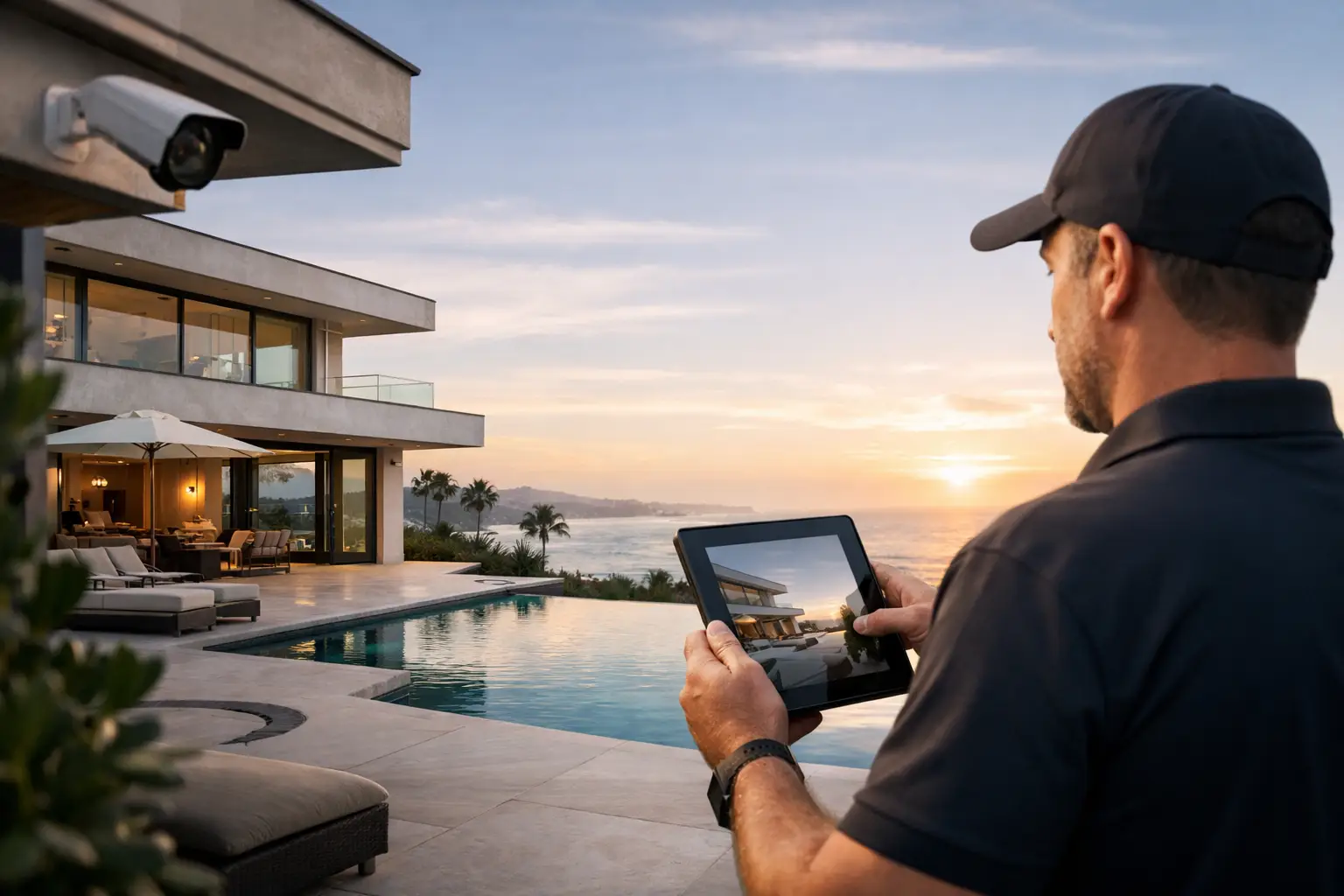
A luxury residence can appear perfectly secure when its doors are locked and its alarm is armed. Yet the most consequential problems often begin quietly: a small leak beneath a sink, an air-conditioning interruption during extreme heat, a pool equipment alert, or a vendor issue that goes unnoticed for days. Why use home watch? Because an unoccupied home needs informed, accountable human oversight – not simply an occasional drive-by or a neighbor’s good intentions.
For seasonal and absentee homeowners, professional home watch provides a clear line of care between departure and return. It brings consistency to property oversight, documents the condition of the residence, and creates a reliable local response when something requires attention.
Why Use Home Watch Instead of Leaving a Home Vacant?
A vacant residence is not necessarily an unattended one. The distinction matters. High-value homes contain sophisticated systems that continue operating long after the homeowner leaves: climate control, plumbing, irrigation, security, pool equipment, appliances, smart-home technology, and often specialty finishes that are sensitive to heat, moisture, or prolonged inactivity.
When a home is occupied, a developing issue is usually discovered quickly. A resident notices a change in temperature, hears an unfamiliar sound, sees water where it does not belong, or receives a package that should not be sitting at the entry. When the home is empty, the same issue may continue unnoticed until it causes avoidable damage or creates a more complicated repair.
Professional property oversight is designed to shorten that gap. Structured interior and exterior inspections provide a disciplined way to observe the home’s condition, identify exceptions, and communicate findings promptly. This is particularly valuable in Scottsdale, Paradise Valley, and Fountain Hills, where seasonal heat, monsoon conditions, irrigation concerns, and the demands of luxury-home systems make casual oversight insufficient.
Home watch is not a substitute for homeowners insurance, security monitoring, or preventive maintenance. Those protections each serve a different purpose. Home watch complements them by placing trained eyes inside and around the property on a scheduled basis, with the judgment to recognize when a condition deserves escalation.
The Cost of Small Problems Left Unseen
The value of home watch is often clearest in the issues no homeowner plans for. A minor plumbing leak can affect cabinetry, flooring, walls, and adjacent rooms. An HVAC concern can compromise interior comfort and place unnecessary strain on equipment. A failed irrigation component can leave landscaping distressed or create excessive water use. After a storm, drainage, roofline, pool, gate, and exterior conditions may all warrant attention.
No service can promise that a problem will never occur. What professional home watch can do is establish a repeatable process for finding visible concerns sooner, documenting what was observed, and helping the homeowner make informed decisions. Earlier detection frequently means more options, less disruption, and a better chance of containing the issue before it becomes extensive.
This is where a white-glove standard makes a meaningful difference. A quick walkthrough may confirm that the house is still standing. A structured inspection considers the condition of the home as a living asset. It looks beyond the obvious to the systems, access points, environmental conditions, and details that protect the owner’s investment and preserve the standard of the residence.
What a Professional Home Watch Visit Should Include
The exact inspection plan should reflect the property, the season, and the owner’s preferences. A lock-and-leave condominium has different priorities than a large estate with a pool, landscape features, guest spaces, and multiple mechanical systems. Still, the best programs share one essential quality: consistency.
A professional visit should follow a defined checklist rather than rely on memory. Interior oversight may include visible plumbing checks, temperature and humidity observations, appliance and electrical observations, signs of leaks or pest activity, and an assessment of security-related concerns. Exterior oversight may include entry points, windows, visible roofline conditions, irrigation, landscaping, pool areas, drainage, gates, and package or flyer accumulation.
Documentation is equally important. Time-stamped photos and clear reporting provide an objective record of each visit. They allow homeowners to see that their residence has been inspected and understand whether anything requires a decision. For clients who spend months in another state or Canada, that level of transparency replaces uncertainty with a practical, documented view of the property.
At I Watch 4 You, the HomeWatchIT® reporting process supports this standard of accountability by organizing inspection findings and photographs into a professional record. The technology is useful because it reinforces the process, not because technology alone protects a home. The real value is a trained local professional who knows what to observe, communicates clearly, and follows through when a concern is identified.
Rapid Coordination Protects More Than the Property
When an issue arises, homeowners do not want to search for a plumber, HVAC technician, pool professional, or restoration vendor from hundreds of miles away. They want a trusted point of contact who can provide access, meet a service provider when appropriate, document the work in progress, and keep communication organized.
Vendor coordination is one of the most practical reasons to use home watch. It does not remove the homeowner’s authority over repairs or costs. Rather, it gives the owner an informed local representative who can help reduce delays and avoid unnecessary confusion. That is especially valuable when an owner is traveling, managing multiple residences, or simply prefers privacy and a single, accountable channel of communication.
There is a trade-off to consider. A basic service may cost less, but it may offer limited reporting, inconsistent inspection points, or no support when a problem is found. For a luxury residence, the question is not only whether someone visits. It is whether the visit is precise enough to be useful and whether the provider has the responsiveness to act when conditions change.
Home Watch Helps Preserve the Experience of Returning Home
The benefit of professional oversight is not limited to risk reduction. It also changes the experience of coming back to Arizona. Instead of arriving to a house that needs immediate attention, homeowners can request return-preparation concierge support tailored to their needs.
That may involve coordinating cleaning, checking the home’s climate and basic readiness, arranging for groceries or other requested services, or confirming that scheduled vendors have completed their work. For a homeowner returning after a summer away or before hosting family and guests, these details matter. A residence should feel cared for and ready, not like another project waiting at the end of a long trip.
Concierge support should always be handled with discretion. Luxury homeowners rightly expect their routines, schedules, access information, and property details to be treated as private. The strongest home watch relationship is built on clear procedures, appropriate communication, and respect for the owner’s preferences.
When Home Watch Is Most Valuable
Home watch is particularly well suited to owners who leave their residence for several weeks or months, maintain a second home, travel frequently, or have a property with systems that require regular observation. It can also be a prudent choice after a renovation, before and after a significant weather event, or during a period when vendors need access to an otherwise vacant residence.
Weekly visits are common, but the right frequency depends on the home and the owner’s risk tolerance. A condominium with managed exterior common areas may need a different plan than a custom home with extensive grounds and water features. The best approach is neither excessive nor casual. It is a schedule based on the property’s complexity, the season, and the level of confidence the owner wants while away.
Choosing a provider should come down to more than a checklist. Look for defined inspection procedures, detailed reporting, professional insurance and credentials, local vendor relationships, dependable communication, and a service philosophy that matches the caliber of the home. Most of all, choose someone who treats access to your residence as a responsibility earned through consistency.
A well-managed home watch relationship allows you to leave without feeling detached from your property. While you focus on your time away, your home remains under the care of a local professional who understands that every visit is a matter of trust.

