
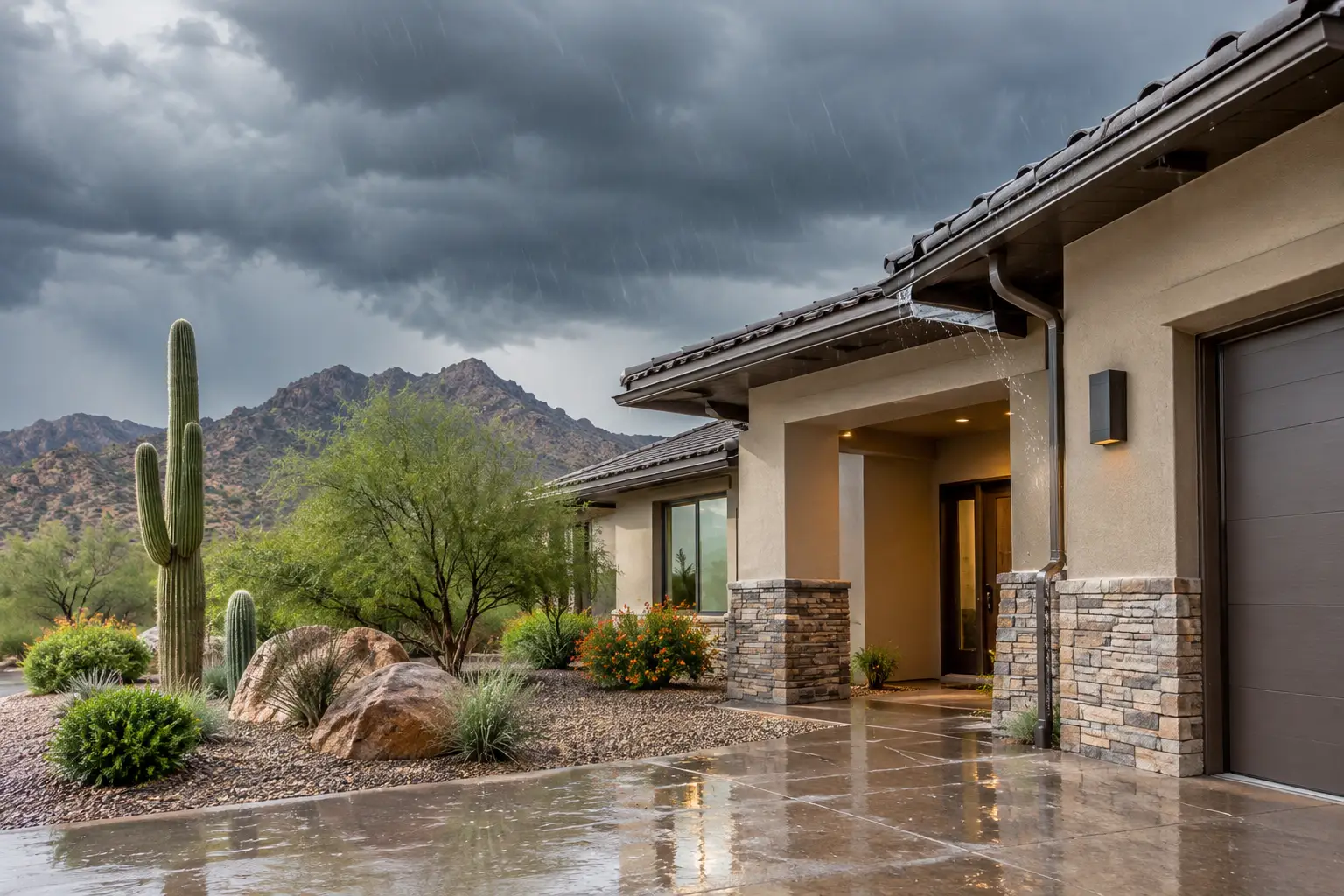
A desert home can look perfectly composed at noon and face a very different set of conditions by late afternoon. Wind-driven rain, sudden runoff, lightning, dust, and debris can expose small vulnerabilities quickly – especially when a seasonal residence is unoccupied. To prepare Scottsdale homes for monsoon season, owners need more than a quick look at the roofline. They need a deliberate plan that accounts for the property’s exterior, mechanical systems, drainage paths, and response procedures.
For luxury homeowners who are away during the summer, monsoon preparation is not simply a maintenance task. It is a matter of protecting the condition, security, and long-term value of a significant asset. The right preparation helps prevent a manageable concern, such as a clogged drain or a loose patio cover, from becoming a costly repair that goes unnoticed.
Begin With the Exterior Envelope
The exterior of a residence takes the first impact from monsoon weather. High winds can lift loose roofing materials, shift unsecured furnishings, drive water beneath poorly sealed openings, and send desert debris into drainage areas. Before the season begins, the home’s protective envelope deserves a close, structured review.
Start with the roof, including tiles, flashings, vents, skylights, and areas around solar equipment. A roof does not need to be visibly leaking to have a point of vulnerability. A cracked tile, deteriorated sealant, or displaced flashing may remain unnoticed until intense rain and wind arrive together. If there is any uncertainty, a qualified roofing professional should assess it before the weather turns.
Windows, exterior doors, garage doors, and patio openings should receive the same attention. Inspect weatherstripping, caulking, screens, tracks, and thresholds for gaps or deterioration. On homes with expansive glass walls or retractable doors, confirm that drainage tracks are clear and that doors close and lock properly. These details matter because wind-driven rain does not behave like an ordinary shower.
Exterior furnishings, decorative objects, umbrellas, and poolside accessories should be secured or stored. In a luxury property, these items are often substantial investments in their own right. More importantly, unsecured pieces can become hazards to windows, landscaping, vehicles, and neighboring homes during a strong wind event.
Protect Drainage Before Water Has Somewhere to Go
Scottsdale’s dry climate can make drainage concerns easy to overlook. Yet hard, compacted soil and heavy bursts of rain can create fast-moving runoff. Water that has no clear path away from the residence may collect near foundations, enter garages, overwhelm patios, or back up at doors and low points.
Gutters, downspouts, roof drains, scuppers, and landscape drains should be cleared before monsoon season. This is particularly important for flat or low-slope roof sections, where debris can collect out of sight. Downspout extensions and drainage routes should direct water away from the home rather than toward walkways, foundation walls, or pool equipment.
Walk the property with attention to grading. Look for settled areas near the foundation, courtyard drains covered by landscaping debris, and hardscape sections that slope toward the home. A beautiful courtyard or covered patio can become a collection point for water if drains are blocked or the grade has changed over time. For properties with elaborate hardscaping, water features, or hillside elements, professional evaluation may be warranted.
It also helps to inspect the garage. Confirm that the door seal is intact, floor drains are clear where applicable, and stored belongings are elevated or protected from incidental water intrusion. Garages frequently contain vehicles, electrical equipment, stored furnishings, and personal items that deserve the same careful protection as the interior living spaces.
Prepare Systems That Must Perform During a Storm
A home’s mechanical systems are often where storm-related concerns become more complicated. Air conditioning, irrigation, pool equipment, electrical panels, generators, and smart-home controls all require attention before the season, particularly if the residence will be vacant.
Have the HVAC system serviced on its regular schedule and confirm that condensate drain lines are functioning correctly. In Arizona, an air conditioning concern is not merely a comfort issue. Extended downtime during summer heat can affect interior humidity, furnishings, electronics, and temperature-sensitive areas of the home.
Pool and landscape equipment should also be reviewed. Secure loose equipment covers, check that pool drains and skimmers are clear, and inspect irrigation controls for leaks or exposed wiring. Monsoon winds can deposit a remarkable amount of dust and organic debris in pools and water features, while heavy rain can alter water balance quickly. If the property has mature landscaping, examine trees for dead limbs or branches extending over roofs, walls, outdoor kitchens, and driveways.
Electrical preparedness deserves a measured approach. Homeowners should know whether the property has surge protection, a backup generator, or monitored systems that require reset after a power interruption. A generator is valuable only if it has been serviced, fuel arrangements are appropriate, and the owner or property representative knows what systems it is intended to support. The right solution depends on the home, its equipment, and how long it may be unoccupied.
Set a Clear Plan for an Unoccupied Residence
When the owners are out of state or out of the country, preparation must include accountability. A storm can pass through quickly, but the effects may not be visible from a security camera or a weather alert. A downed branch, overflowing drain, failed pool pump, power outage, or moisture concern requires local eyes and an organized response.
Before leaving, make sure a trusted local representative has current contact information, gate and alarm instructions, vendor preferences, and authorization to coordinate urgent service when needed. This is especially important in gated communities and high-value residences, where vendor access must be handled discreetly and correctly.
A professional home watch service provides a more disciplined layer of oversight than an occasional neighbor check. Structured inspections can identify whether exterior drainage is holding, whether storm debris is affecting the property, whether systems appear operational, and whether there are visible signs of damage. Time-stamped photo reporting gives owners a clear record of the property’s condition rather than a vague assurance that everything “looks fine.”
At I Watch 4 You, this level of professional property oversight is designed for homeowners who expect precision and prompt communication while they are away. The objective is not to create unnecessary concern after every storm. It is to identify genuine exceptions early, document them carefully, and coordinate qualified vendors when a response is required.
How to Prepare Scottsdale Homes for Monsoon With Better Documentation
Preparation becomes more effective when the property’s baseline condition is documented before storm season. A detailed record of exterior finishes, rooflines, landscaping, gates, pool areas, and key mechanical equipment makes it easier to distinguish a new issue from an existing condition after severe weather.
Photographs should be clear, dated, and specific enough to be useful. A broad image of a backyard does not replace close documentation of a patio roof connection, drainage channel, exterior utility area, or gate latch. For absentee owners, this standard of reporting supports sound decisions without requiring constant travel or guesswork.
Documentation also simplifies vendor coordination. If a roof professional, landscaper, pool company, or restoration provider needs to assess a concern, a property representative can provide accurate observations and recent photos. That reduces delays and helps ensure work is directed to the correct area from the outset.
Do Not Wait for the Forecast
There is a practical difference between seasonal preparation and reacting to a storm warning. Once rain and wind are in the forecast, reputable vendors may already be fully scheduled, and safely accessing roofs or exterior equipment may no longer be possible. Preparation completed in advance gives owners better choices and less pressure.
The most effective approach is calm and methodical: inspect the exterior, clear drainage, service essential systems, secure vulnerable items, and establish who will check the property after significant weather. For a second home, that final point often matters most. A well-prepared residence still benefits from someone local who can verify its condition with the discretion and care the property deserves.
Before leaving Scottsdale for the season, give your home the advantage of a documented baseline and a trusted local presence. Peace of mind during monsoon season is rarely about predicting the weather. It comes from knowing that if conditions change, your home will not be left to face them alone.

