
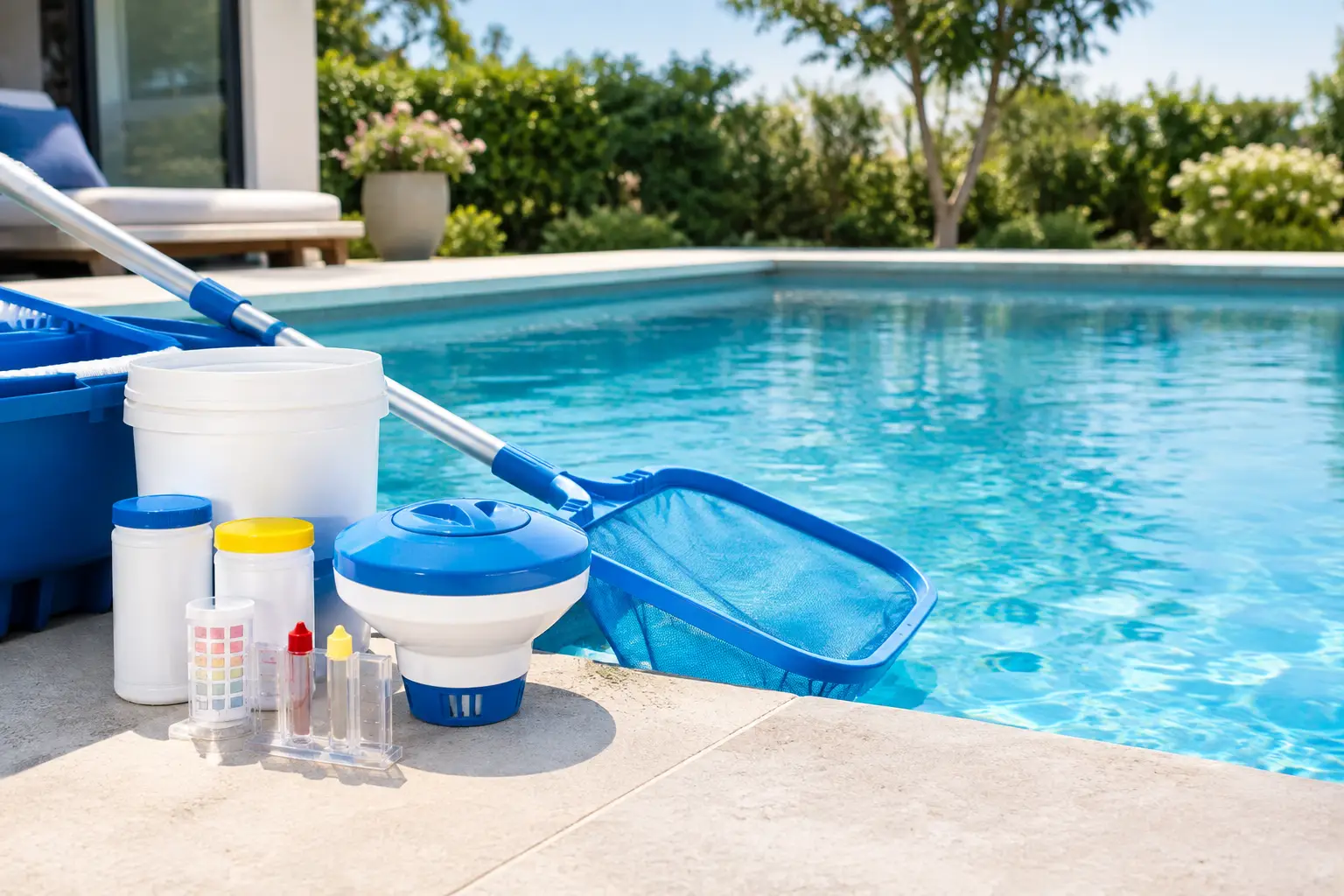
A pool can look perfectly still while a costly issue develops just out of sight. In Arizona, sustained heat, intense sun, windblown debris, monsoon storms, and hard water place unusual demands on pool systems, especially at seasonal residences. This guide to seasonal pool maintenance is designed for homeowners who expect their pool to remain protected, presentable, and ready to enjoy whether they are in Scottsdale for the season or away for several months.
For a luxury property, pool care is not simply a matter of keeping the water blue. It is a disciplined approach to protecting equipment, finishes, surrounding hardscape, and the overall standard of the home. The right routine changes with the season, occupancy, pool type, and the level of professional oversight available.
Why Seasonal Pool Care Requires a Different Standard
A pool at a full-time residence benefits from daily observation. A homeowner may notice a weak return jet, an unusual pump sound, or water loss before it becomes a larger concern. At a second home, those early signals can be missed. A minor leak, a failed autofill valve, or a tripped breaker can affect water quality and equipment long before anyone arrives.
Desert conditions add another layer of exposure. Summer heat accelerates chlorine consumption and evaporation. Dust and wind introduce fine debris that strains filtration. Monsoon rain can alter water chemistry quickly, while leaves and sediment may clog skimmer baskets or obscure a developing problem. Even winter calls for attention, because mild temperatures often keep pools operating year-round.
Consistent care protects more than appearance. Balanced water helps preserve plaster, tile, grout, heaters, pumps, filters, automation systems, and salt cells. It also avoids the unpleasant surprise of arriving at a home that requires days of corrective service before the pool is comfortable to use.
A Guide to Seasonal Pool Maintenance by Season
Spring: Prepare Before the Heat Arrives
Spring is the right time to confirm that the pool is ready for the demanding summer ahead. Have the water professionally tested and adjusted before high temperatures make imbalances harder to correct. Pay close attention to calcium hardness, pH, alkalinity, stabilizer, and sanitizer levels. In Arizona, water chemistry is not static. Evaporation and mineral content can steadily shift the balance.
This is also an appropriate time for a detailed equipment review. Pumps should run smoothly without excessive vibration or unusual noise. Inspect filter pressure, valves, plumbing connections, heater operation, pool lights, and automation controls. If the pool has a saltwater system, inspect the salt cell for scale and confirm that chlorine output remains appropriate.
Spring preparation should extend beyond the waterline. Check deck drains, coping, tile, outdoor shower fixtures, and the condition of furniture and umbrellas. A clean, well-maintained pool setting reflects the same standard of care as the residence itself.
Summer: Protect Water Quality and Equipment Under Pressure
Summer is the highest-risk season for unattended pools in Paradise Valley, Scottsdale, and Fountain Hills. High temperatures increase evaporation, which can lower water levels enough to affect skimmer performance and place additional stress on the circulation system. The autofill system should be monitored closely, not merely assumed to be functioning correctly.
A pool technician should typically visit on a reliable schedule, with service frequency based on the pool’s design, landscaping, exposure, and use. Pools surrounded by mature landscaping or located in wind-prone areas may require more frequent debris removal. A larger or heavily used pool may also need more regular chemical adjustment.
During monsoon season, timely inspections matter. Storms can introduce substantial dust, leaves, and runoff in a single afternoon. After severe weather, a professional should assess the water level and chemistry, empty baskets, inspect equipment, and confirm that electrical components and automation systems are operating properly.
Fall: Correct the Effects of Summer
Fall is a valuable reset period. The most intense heat has passed, but the pool has endured months of ultraviolet exposure, evaporation, and heavy equipment use. This is an excellent time to address scale buildup, inspect the filter, and schedule any needed repairs before seasonal occupancy increases.
For homeowners returning to Arizona in the fall, the pool should be evaluated as part of a broader arrival-preparation plan. The objective is not simply to turn systems back on. The property should feel ready from the first day, with clean water, appropriate temperature settings, functioning lights, orderly outdoor areas, and no deferred maintenance waiting for the owner.
Winter: Maintain, Do Not Neglect
Arizona pools generally do not require the winterization process common in colder climates. However, less frequent use can create a false sense that little attention is needed. Pools still require circulation, sanitation, debris removal, and water balancing throughout winter.
Cooler water changes chemical demand, so treatment should be adjusted rather than maintained by habit. Running equipment excessively may waste energy, while running it too little can compromise filtration and water clarity. The ideal schedule depends on equipment specifications, water temperature, pool volume, and whether the pool is heated.
If the home will be vacant over the holidays or for an extended period, confirm that service visits continue without interruption. A pool does not pause its maintenance needs because the owners are away.
The Essential Checks for an Unoccupied Home
A dependable pool service is central to proper maintenance, but it should not be the only layer of protection for an unoccupied property. Structured property oversight creates accountability around conditions that may affect the pool and the home as a whole.
During a professional property inspection, the pool area should be observed for visible water-level changes, debris accumulation, equipment leaks, unusual sounds, damaged gates or fencing, storm impact, and signs of irrigation overspray. The surrounding patio and outdoor living areas deserve the same attention, particularly after high winds or heavy rain.
Before leaving for an extended stay elsewhere, homeowners should ensure the following items are clearly addressed:
- Pool service frequency, scope of work, and a reliable escalation procedure for repairs
- Current contact information for the pool technician, equipment specialist, and any authorized vendors
- Access instructions for gates, equipment rooms, and automation controls
- Preferred approval limits for routine repairs versus larger recommendations
- A documented plan for post-storm inspections and return-home preparation
Clear instructions reduce delays when action is needed. They also spare homeowners from making time-sensitive decisions from another state or country without a trusted local professional providing context.
Water Level Is a Small Detail With Major Consequences
Water level is one of the simplest visual indicators of pool health, yet it is often overlooked. A level that falls too low can allow the skimmer to draw air, reducing circulation and potentially damaging equipment. A level that rises too high after rain can diminish skimming performance and alter chemical balance.
The cause of a changing water level is not always obvious. Evaporation is expected during Arizona summers, but rapid or persistent loss may point to a leak, an autofill issue, or a plumbing concern. A watchful inspection process distinguishes between normal seasonal conditions and changes that warrant service.
Professional Oversight Creates a Clear Record
For seasonal homeowners, confidence comes from knowing that someone is not only present, but observant and accountable. Time-stamped photo reporting provides a documented view of pool conditions and exterior areas between visits. It helps owners understand what was observed, what action was taken, and whether vendor recommendations were completed.
This level of coordination is particularly valuable when several systems intersect. A pool concern may involve an electrician, plumber, landscaper, leak detection specialist, or equipment technician. White-glove property oversight keeps communication organized, confirms access, and follows through until the matter is resolved.
At I Watch 4 You, structured inspections and vendor coordination are designed to give absentee homeowners a clear line of sight into the condition of their residence, including the outdoor spaces that define Arizona living. The goal is discreet, consistent protection without requiring the homeowner to manage every detail from afar.
Plan for the Return, Not Just the Absence
The strongest seasonal maintenance plan begins before departure and ends with a thoughtful return. Several days before the homeowner arrives, the pool should be checked for clarity, balance, circulation, cleanliness, and proper equipment operation. If the home includes a spa, water features, or outdoor kitchen, those elements should be reviewed as well.
A return-ready pool should invite use immediately. That means no cloudy water, no equipment alarms, no debris waiting in the skimmer, and no unanswered questions about a repair completed months earlier. When a residence is cared for with precision during the owner’s absence, coming home feels exactly as it should: calm, orderly, and ready to enjoy.

