
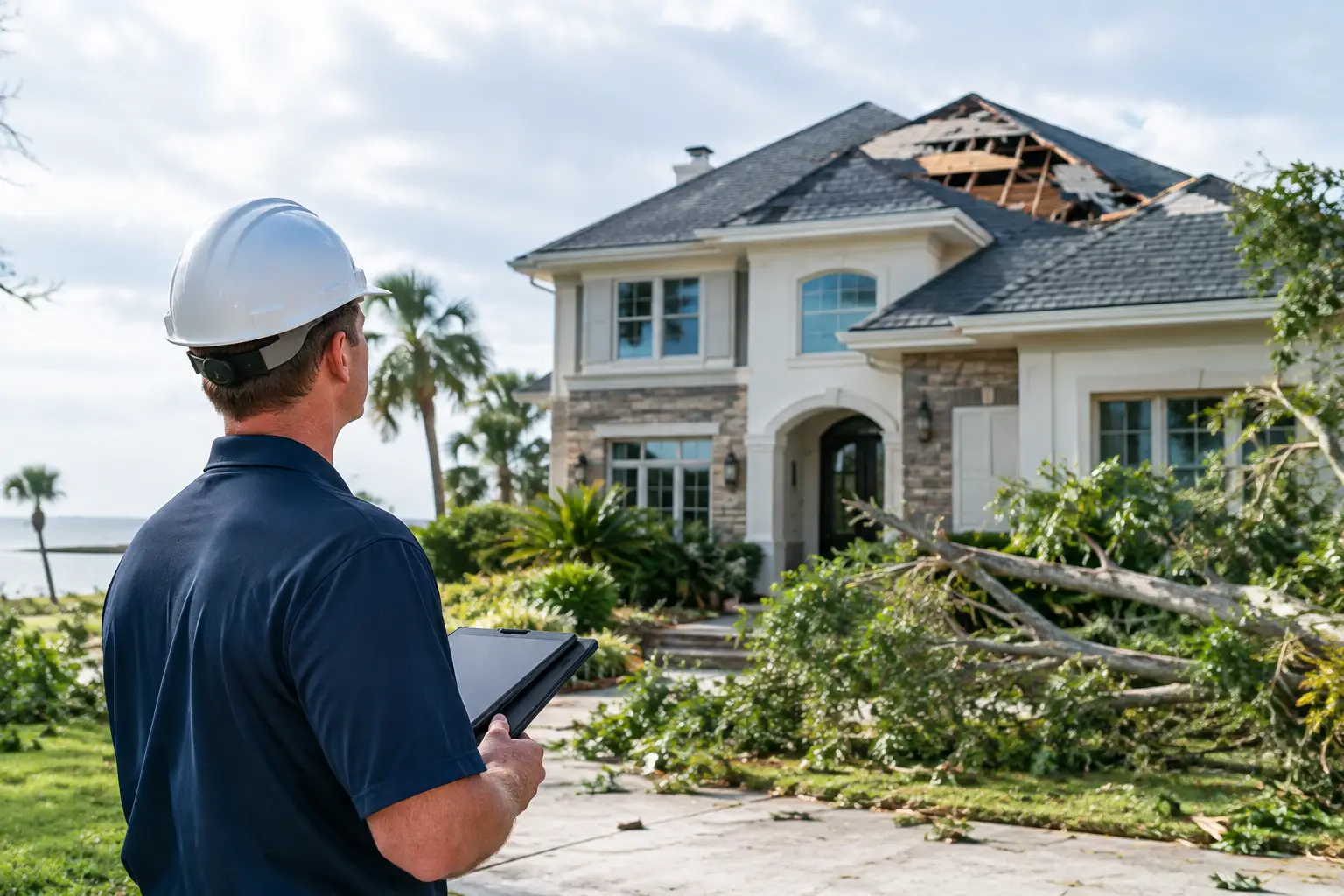
A Scottsdale monsoon can move through a neighborhood in minutes, leaving a quiet second home with wind-driven water at a patio door, debris across the pool deck, or a roof concern that is not visible from the street. For an owner hundreds of miles away, the first hours matter. This example of storm damage response shows what professional property oversight should look like when a luxury residence needs immediate, measured attention.
The goal is not to create alarm over every fallen branch or wet tile. It is to identify the actual condition of the home, prevent a manageable concern from becoming a costly loss, and give the homeowner clear information without requiring them to manage vendors, access, and decisions from afar.
An Example of Storm Damage Response, Step by Step
Consider a seasonal residence in North Scottsdale after a severe summer storm. The homeowner is out of state. A weather alert has indicated high winds, heavy rain, and localized flooding, and the property is scheduled for its regular structured inspection the following morning.
Upon arrival, the property professional finds landscape debris at the entry, standing water near an exterior drainage area, and a small amount of water inside near a sliding glass door. The security system is functioning, but a section of patio shade structure has shifted in the wind. Nothing about the situation calls for speculation. It calls for a calm, documented response in the right sequence.
Confirm safety and secure the residence
The first priority is personal safety and the protection of the home. If there is a downed electrical line, active sparking, significant structural damage, or a threat to occupants or neighboring properties, emergency services and the appropriate utility provider take precedence. A home watch professional should never place themselves or others at risk to complete an inspection.
In this scenario, the immediate concern is water intrusion rather than an active emergency. The property professional verifies that exterior doors, windows, gates, and garage access points are secure. They check for signs of broken glass, forced openings, roof debris that may pose a hazard, and water approaching vulnerable thresholds.
Inside, they locate the water near the sliding door, assess whether it is still entering, and take reasonable protective action within the scope of their service. That may include placing towels or absorbent materials, moving nearby furnishings away from moisture, and ensuring the area is not creating a slip or electrical hazard. The purpose is stabilization, not improvised restoration work.
Create a precise record before conditions change
Storm conditions can change quickly. Water recedes, debris is removed, and a minor roof issue may not be apparent once a contractor arrives. Detailed documentation protects the homeowner’s understanding of what occurred and supports informed next steps.
A professional report should include time-stamped photos of the exterior, the affected door area, standing water, the shifted shade structure, and any interior moisture. Notes should distinguish between observed facts and items requiring further evaluation. For example, “water observed along the interior track of the west-facing sliding door” is more useful than assuming the source is a failed seal.
At I Watch 4 You, structured inspections supported by HomeWatchIT® provide an accountable record of property conditions. For an absentee owner, that level of reporting is not a courtesy. It is the basis for making decisions with confidence when they cannot be present.
Notify the homeowner with facts, not noise
A luxury homeowner does not need a stream of uncertain messages while a storm is still passing. They need a prompt, composed update that explains what was found, what has already been done, and what requires approval.
In this example, the owner receives a concise communication: the residence is secure; minor water intrusion was found at one sliding door; the area has been stabilized; no visible ceiling staining or electrical concern was observed; exterior debris and a shifted shade structure require attention. Photos and inspection notes accompany the update.
The communication should also make the decision path clear. The homeowner may authorize a trusted restoration or glass professional to assess the door, approve a shade contractor to secure the structure, and request follow-up inspections after repairs. If the water is limited and the forecast is clear, a homeowner may choose monitoring before authorizing a full service call. The right response depends on the severity, the home’s materials, the likelihood of recurring weather, and the owner’s risk tolerance.
Coordinate qualified vendors and controlled access
Vendor coordination is where many unattended-home situations become unnecessarily difficult. A contractor needs access, the homeowner needs updates, and the home should not be left open or unattended while work is performed.
Professional property oversight provides a controlled point of contact. The property professional can coordinate a qualified vendor, meet them at the residence when appropriate, provide access, and confirm the home is resecured afterward. They can also document the condition before and after the visit and relay the contractor’s findings to the homeowner.
That distinction matters. A home watch provider is not a substitute for a licensed roofer, restoration company, electrician, or insurance professional. Their role is to help the right people respond efficiently, preserve continuity, and keep the homeowner from having to arrange access from another state or country.
For the sliding door concern, a qualified specialist may determine that wind-driven rain entered through a temporary gap rather than a failed door system. Or they may identify worn weatherstripping that needs replacement. For the shifted shade structure, the contractor may find a simple fastener issue, or a larger repair may be advisable. Clear documentation keeps each recommendation grounded in the actual condition of the property.
Protect against secondary damage
The most expensive part of a storm event is often not the original incident. It is what happens afterward: moisture left in a concealed area, a gate left unlatched, a pool system interrupted, or a roof issue that receives no follow-up.
After immediate stabilization and vendor assessment, the home should receive a scheduled recheck. In this example, a follow-up visit confirms that the door area is dry, the shade structure has been secured, exterior debris has been removed, and all access points are locked. The inspection also includes related areas that may have been affected by the weather, such as the garage, ceilings beneath rooflines, pool equipment, irrigation controls, and perimeter walls.
This is particularly valuable in Paradise Valley, Scottsdale, and Fountain Hills, where intense heat after rain can accelerate certain issues while monsoon winds can move debris into unexpected places. A second look is not redundant. It is how a professional response closes the loop.
What Separates Oversight From a Basic Walkthrough
A storm response should feel organized even when the weather is not. The difference lies in preparation and accountability: established inspection standards, documented property baselines, trusted vendor relationships, clear homeowner authorization, and a reliable process for confirming completion.
Before storm season, thoughtful preparation can reduce uncertainty. Exterior furnishings and shade elements may need to be secured, drainage paths kept clear, emergency contacts reviewed, and key systems documented. Yet preparation has limits. No residence is entirely insulated from wind-driven rain, fallen limbs, or sudden equipment disruptions. The value of home watch service is having a trusted local professional who recognizes an exception, responds within an established process, and treats the home with appropriate discretion.
For a luxury residence, response quality is measured not only by speed, but by judgment. Sending a contractor for every weather alert can create unnecessary expense. Waiting too long when water is present can create a far greater problem. Experienced oversight balances those trade-offs with visual evidence, knowledge of the home, and direct communication.
A well-managed storm event should leave the homeowner with more than a report. It should leave them with the assurance that someone was present, the property was treated with care, and every necessary next step was handled with the same precision expected of the home itself.

