
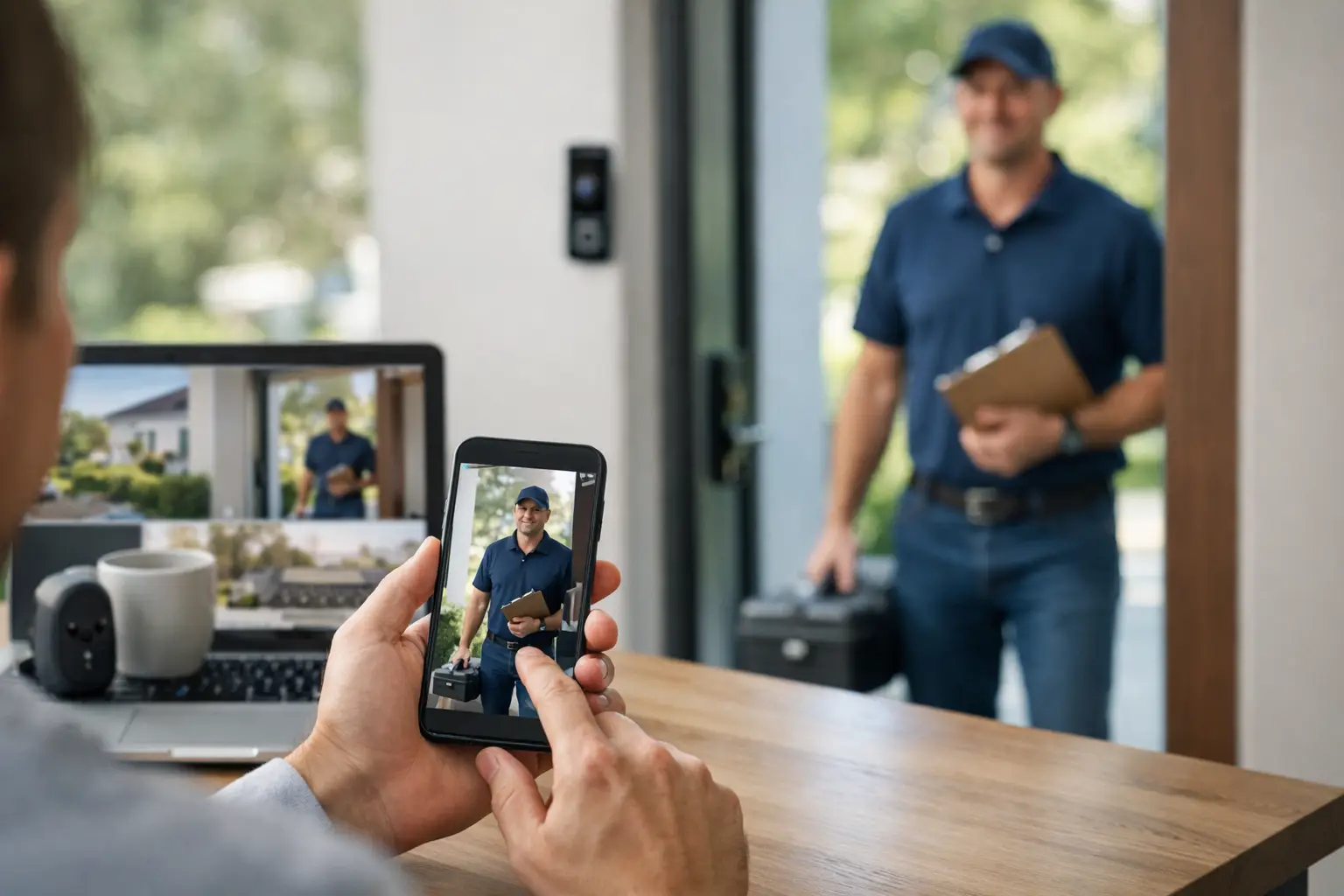
A plumbing concern does not wait for a convenient time. Neither does a monsoon-related drainage issue, an air-conditioning alert, or a pool equipment malfunction. When you are hundreds of miles away from your Scottsdale or Fountain Hills residence, the question is not simply whether a vendor can get inside. It is how to handle vendor access remotely without compromising privacy, security, or the condition of a high-value home.
For seasonal and absentee homeowners, vendor access should never depend on an improvised phone call, a hidden key, or a neighbor being available at short notice. A well-managed process creates a clear chain of accountability: the issue is verified, the right professional is authorized, access is controlled, work is documented, and the home is checked again after the vendor leaves. That level of structure is what turns a disruptive repair into a professionally managed detail.
Why Remote Vendor Access Requires a Defined Process
Luxury residences often have more complex systems, specialized finishes, valuable furnishings, and heightened privacy expectations. A vendor may need access to mechanical rooms, rooftop HVAC equipment, pool controls, smart-home panels, garages, or interior spaces containing personal belongings. Each visit introduces practical questions: Who approved the work? What areas may be accessed? Who confirms that the home is secure afterward?
Without a defined process, minor uncertainties can create unnecessary risk. A contractor may arrive before an owner has been fully informed, use an outdated door code, enter areas outside the scope of work, or leave a gate unsecured. Even when a vendor is reputable, remote ownership calls for more than good intentions. It calls for documented direction and local professional oversight.
Begin With Verification, Not Assumptions
The first step is confirming that the issue is real and understanding its urgency. A sensor notification, an observation from a neighbor, or a vendor recommendation can be useful, but it should not automatically lead to access being granted. A structured property inspection can identify whether there is active water intrusion, an HVAC failure, evidence of pest activity, storm damage, or another condition requiring prompt attention.
Verification matters because the right response depends on the circumstances. A small irrigation concern may be scheduled around the owner’s preferences. A water leak, however, may require immediate shutoff measures and an emergency visit. Clear information allows the homeowner to approve a decision with confidence rather than reacting to incomplete details.
Confirm the Vendor and Scope Before Entry
Before access is arranged, confirm the vendor’s identity, scheduled arrival window, work order, and authorized scope. This is particularly valuable when a property has several service providers or when a familiar company sends a new technician. The person arriving at the home should match the appointment details.
The scope should be equally specific. If the technician is servicing the air-conditioning system, access may be limited to the garage, side yard, attic hatch, or designated mechanical area. If interior access is necessary, establish which rooms are involved and whether furnishings, art, or delicate finishes require special care. Specific instructions protect the home and prevent misunderstandings.
How to Handle Vendor Access Remotely With Confidence
The most reliable approach combines controlled access with a local representative who can manage the visit in person. Remote door locks and cameras can be useful tools, but technology alone does not replace informed oversight. A code can open a door; it cannot assess whether a technician tracked debris through the home, whether a gate was latched, or whether an issue discovered during service needs immediate escalation.
Use Temporary, Limited Access Whenever Possible
Avoid sharing a permanent access code with a vendor. Instead, use a single-use code, a time-limited code, a monitored smart lock, or in-person entry by a trusted property representative. The appropriate method depends on the work required and the home’s security configuration.
For an exterior-only pool service or landscape repair, a controlled side-gate entry may be sufficient. For interior repairs, a local home watch professional can meet the vendor, open only the necessary areas, and remain available during the appointment. This is often preferable for homes with sophisticated security systems, collections, or spaces that are not relevant to the repair.
Keep the Homeowner in the Approval Loop
Remote management should feel transparent, not burdensome. The homeowner should receive a concise explanation of the issue, recommended next step, estimated timing, and any decision requiring approval. For non-emergency work, it is reasonable to request an estimate before authorizing service. For an active leak or safety concern, the priority may be limiting damage first and reviewing the full repair recommendation immediately afterward.
A trusted local representative can communicate with the vendor on site while keeping the homeowner informed. This avoids the frustration of coordinating multiple calls across time zones, particularly when the homeowner is traveling or managing a primary residence elsewhere.
Document Arrival, Work, and Departure
Documentation is the difference between hoping a visit went well and knowing what occurred. Time-stamped photos before and after service can confirm the property’s condition, the area accessed, and the visible result of the work. Written notes should identify the vendor, technician, arrival and departure times, services performed, recommendations made, and any follow-up required.
At I Watch 4 You, structured inspections and HomeWatchIT® reporting provide a practical record that supports this level of accountability. For an absentee homeowner, a clear report is more than a courtesy. It creates continuity across inspections, repairs, and future vendor visits.
Protect the Home During the Appointment
Vendor coordination is not complete when the technician arrives. The condition of the home during and after the visit deserves equal attention. If a vendor is working inside, a local representative can observe entry and exit, direct the technician to the authorized area, and help ensure the property remains orderly.
Prepare the Property for the Specific Service
Preparation reduces delays and protects valuable finishes. If an HVAC technician needs attic access, clear the path and identify any fragile furnishings nearby. If a plumber needs access beneath a sink or behind an appliance, arrange the space before the appointment. If a vendor will be near a pool, terrace, or landscaped area, make certain gates, pets, and outdoor features are addressed.
This is not about supervising every technical decision. Qualified vendors should perform their work independently. It is about making sure the property is ready, the access boundaries are understood, and the homeowner’s standards are respected.
Respond Carefully When the Scope Changes
It is common for a technician to find an additional concern once work begins. A routine HVAC service may reveal a failing capacitor. A roof inspection may uncover damaged flashing. A pool technician may identify a leak that requires a specialist.
Not every discovery requires immediate approval, and not every recommendation should be delayed. The appropriate response depends on urgency, cost, potential for further damage, and the homeowner’s pre-established preferences. A professional property oversight plan should identify who may authorize emergency mitigation, what spending limits apply, and when the owner must be contacted before additional work proceeds.
Perform a Post-Visit Security Check
After the vendor leaves, someone should verify that doors, windows, gates, garages, and access panels are secure. If the security system was disarmed, it should be restored. Thermostats, water shutoff settings, pool equipment, and smart-home controls should be checked when relevant to the service performed.
A post-visit inspection also catches simple but consequential details: a light left on, an exterior gate left unlatched, a garage remote placed in the wrong location, or debris left near an entry. For a residence that may remain vacant for weeks or months, these details are part of protecting the home.
Establish Expectations Before You Leave
The best time to plan vendor access is before a problem arises. Homeowners should maintain an approved vendor list, including preferred service companies, emergency contacts, and providers who understand the property’s systems. It is also wise to document access instructions, alarm procedures, approved areas, pets or special considerations, and communication preferences.
Discuss authorization thresholds with your home watch provider. For example, you may authorize immediate action to stop active water damage while requiring approval for repairs above a defined amount. You may prefer text notification for urgent issues and a detailed report for scheduled maintenance. These choices create clarity when time matters.
For homes in Arizona, seasonal planning can be especially valuable. Before departing for an extended period, consider scheduled servicing for air-conditioning, irrigation, pool equipment, roofing, and pest control. Coordinated appointments during a home watch visit can reduce last-minute access requests and help preserve the home’s readiness through extreme heat, storms, and seasonal absences.
Discretion Is Part of Good Vendor Management
A luxury home should not become a revolving door simply because the owner is away. The most effective vendor-access process is quiet, controlled, and proportionate to the work at hand. It limits unnecessary entry, protects personal information, and ensures that only approved professionals receive access.
This discretion is especially meaningful in private communities and residences with visible assets or advanced security features. Details such as travel schedules, alarm credentials, collection locations, and owner contact information should be handled on a need-to-know basis. A professional local representative serves as a buffer between the property and routine service activity, allowing the owner to retain control without having to personally manage every appointment.
A well-cared-for home should feel exactly as you left it, except for the issue that has been resolved. With clear approval procedures, supervised access, and meticulous follow-through, a necessary vendor visit can remain just that: a carefully managed service appointment that never disturbs your peace of mind.


4 Comments