
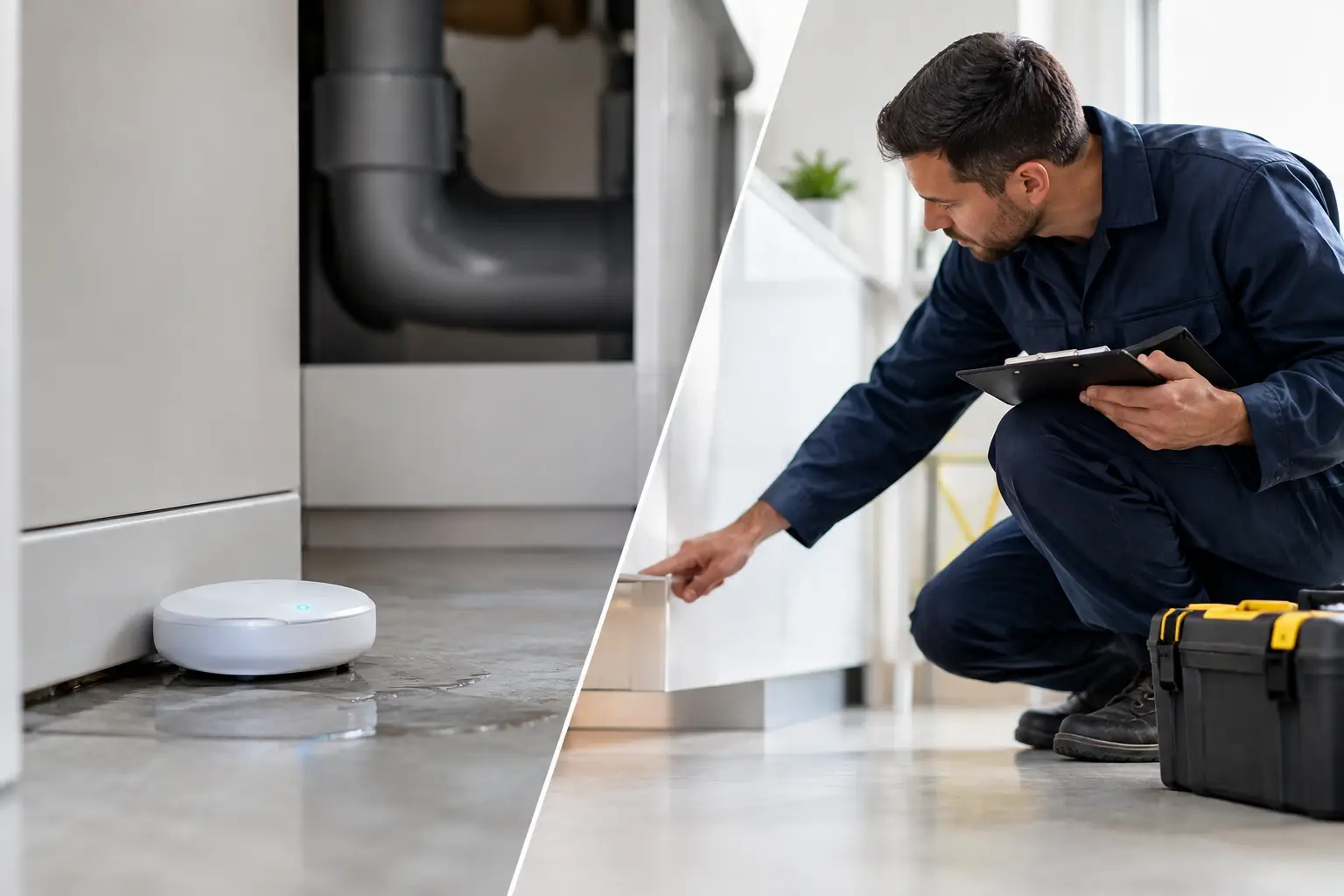
A water heater can release a slow, damaging leak long before a homeowner returns for the season. So can an ice maker line, reverse-osmosis connection, washing machine hose, or under-sink fitting. For owners of high-value residences, smart leak sensors versus inspections is not simply a technology question. It is a question of whether the home has meaningful protection when no one is there to notice the first small sign of trouble.
Smart sensors offer valuable early warning in the right locations. Professional property oversight provides something different: context, verification, and a trained set of eyes on the systems and conditions that technology cannot fully interpret. The strongest approach is rarely an either-or decision.
What Smart Leak Sensors Do Well
A smart leak sensor is designed to detect moisture where it is placed and send an alert through a connected app, hub, or monitoring system. Positioned carefully beneath sinks, near water heaters, behind refrigerators, beside washing machines, and around HVAC equipment, these compact devices can identify water at the floor level before a leak becomes a visible disaster.
That speed matters. A sensor may alert an owner within minutes of a water event, particularly when the home is vacant and an immediate call can be made to a trusted local contact. Some systems can also work with automatic shutoff valves, which may stop water flow when a significant leak is detected.
For a seasonal residence in Scottsdale, Paradise Valley, or Fountain Hills, leak sensors can be particularly useful around known risk points. A home left unoccupied through summer storms or during extended travel still has plumbing connections, water-dependent appliances, and mechanical systems operating behind closed doors. An alert creates an opportunity to respond sooner.
Sensors also create a useful record. Depending on the system, an owner may see alerts related to temperature, humidity, connectivity, or battery status in addition to moisture detection. This information can help identify patterns that deserve attention.
Where Sensors Have Limits
A leak sensor only sees the area it can physically monitor. Water does not always travel neatly to the sensor placed beneath a cabinet. It may run behind a wall, collect inside a vanity, drip into a ceiling cavity, or emerge several feet from the original failure. A sensor beside the water heater may offer excellent protection for one type of event while providing no warning about a slow leak at an upstairs toilet supply line.
Placement is also a practical concern. Luxury homes often have multiple wet bars, guest suites, outdoor kitchens, laundry areas, secondary refrigerators, filtration systems, pool equipment, and separate casitas. Comprehensive coverage can require more sensors than homeowners initially expect, along with thoughtful placement and periodic testing.
Then there is the technology itself. Batteries need replacement. Wi-Fi networks can go offline. A sensor can be moved during cleaning or maintenance and not returned to its intended position. Notifications can be missed while traveling, in meetings, or asleep in another time zone. An alert is only the beginning of a response, not the response itself.
Most significantly, a sensor cannot tell you why moisture is present, how far damage has traveled, whether an appliance is functioning normally, or who should enter the property to address the issue. It cannot inspect for roof concerns after a monsoon, identify a failing irrigation line, notice an unusually warm interior, or confirm that a vendor completed work appropriately.
Smart Leak Sensors Versus Inspections: A False Choice
Comparing smart leak sensors versus inspections can make the two seem interchangeable. They are not. They perform distinct roles in a complete property-protection plan.
A sensor is a focused detection tool. It is always in one location, watching for a limited set of conditions. Its advantage is immediacy. When water reaches it and the connection works as intended, it can sound the alarm at any hour.
A structured inspection is professional property oversight. It evaluates visible conditions across the residence and exterior during a scheduled visit. A trained home watch professional can look for evidence of leaks, humidity concerns, appliance or HVAC irregularities, changes in the pool area, storm-related damage, pest activity, security issues, and conditions that signal a small concern may be developing into a larger one.
Neither solution eliminates all risk. A sensor may not detect a hidden leak, and an inspection cannot be physically present every minute between visits. Together, however, they close important gaps. Technology provides continuous watch at high-risk points. Consistent in-person inspections provide broader assessment, on-site judgment, and accountable follow-through.
Why Inspection Quality Matters in a Luxury Residence
Not all inspections offer the same level of care. A casual walkthrough may confirm that the home appears intact, but it may not provide the documentation or system-focused attention a substantial property deserves.
A white-glove home watch program is structured around consistency. The professional follows a defined process, examines interior and exterior areas, documents observations with time-stamped photos, and communicates findings clearly. This matters when an owner is hundreds or thousands of miles away. The goal is not merely to report a problem after it becomes obvious. It is to recognize changes early, verify conditions, and coordinate an appropriate response.
Consider a minor water stain beneath a sink. A sensor may not have activated because the leak is intermittent or contained within a cabinet. During an inspection, that stain can prompt a closer look, a recommendation for a plumber, and photographic documentation before the matter progresses.
The same principle applies beyond plumbing. Condensation around an air handler, a refrigerator running warmer than expected, a silent pool pump, windblown debris at an entry point, or a landscape irrigation issue may not trigger a smart device. Each can still affect the comfort, condition, and value of an unattended home.
Building a Layered Protection Plan
The right level of protection depends on the residence, its systems, its vacancy schedule, and the owner’s tolerance for risk. A smaller condominium with a centralized building water system may have different exposure than a large estate with multiple HVAC zones, pool equipment, exterior water features, and a guest house.
Start by identifying the property’s most likely water risks. Water heaters, laundry rooms, refrigerator lines, sinks, toilets, filtration equipment, and HVAC condensate areas are common priorities. Install sensors where they can remain stable, reach reliable connectivity, and be easily tested during routine service visits.
Next, establish who receives an alert and what happens afterward. An owner should not have to search for a plumber from another state while trying to interpret an app notification. A clear response plan identifies a local property representative, preferred vendors, authorization parameters, and the steps to take if water is found.
Finally, maintain a regular inspection schedule. The schedule should be appropriate to the home’s complexity and the time it will be unoccupied. During each visit, the professional should verify that sensors appear properly placed and that any visible signs of moisture, system irregularity, or environmental change receive attention.
For clients of I Watch 4 You, this type of layered approach supports the standard of precision expected for a luxury residence. Technology can enhance awareness, while documented inspections and vendor coordination ensure that an alert or observation becomes a managed solution.
The Real Value Is a Capable Response
The costliest part of a leak is often not the initial drip. It is the delay between detection and action. Even the best sensor cannot place a call to a restoration company, open the property for a plumber, document the affected area, or confirm that repairs protect the home’s finishes and systems.
Likewise, a home watch professional should not be expected to replace intelligent detection at every vulnerable point. Sensors provide an additional layer of awareness between visits, especially for sudden failures that occur overnight or shortly after an inspection.
For homeowners who value privacy and control, the objective is not to fill a residence with gadgets or to schedule inspections without purpose. It is to create an orderly system: carefully selected technology, structured in-person oversight, clear documentation, and a trusted local response when the home needs attention.
A well-protected seasonal home should feel quietly managed rather than constantly worrying its owner. Place sensors where they can make a genuine difference, then ensure a capable professional is ready to see the full picture and act with care when it matters.

